Showing posts with label Hakka cuisine. Show all posts

Monday, February 18, 2013

Hakka Pen Cai (客家盆菜)

Traditional Hakka Cuisine – Come and enjoy a big bowl feast    

10th February 2013
1st lunch of Lunar Calendar year of Snake (农历大年初一)- Part 1

In contrary to the wide choices of Chinese meals available at various food outlets during the eve of CNY, it was hard to find any decent Chinese meals on the first and second day of CNY; not even the Chinese hawker/street foods! In Penang, many of the Kopitiam, hawker centres and restaurants would close for at least 2 days before resuming business on the third or fourth day of CNY. Having our CNY lunch at home on the first day was almost always our only alternative.

Since Mum’s passing, my second sister-in-law, Lai Cheng has taken over the task of manning her kitchen during festive days. With my return, she was so glad to have extra helping hands in preparing the CNY lunch. This year, when I noticed she had bought some expensive seafood materials such as sea cucumber, frozen baby abalone and fish maw, it gave me the idea to make them into Hakka Pen Cai, the deluxe version as compared to what was usually served in restaurants.

Pen Cai (盆菜) or Big Basin Feast is one of Hakka delicacy cuisine commonly served during CNY, or other festive days and weddings. This communal dish was made popular by Hong Kong New Territories Hakka Village. Hakka people in the olden days mostly resided in the hills and was well known for their frugal lifestyle.

The original version of Pen Cai only used basic and fresh ingredients that were easily available from their farms, i.e. vegetables, chicken, duck and pork.  However, nowadays this dish has transformed into an exotic and lavish dish by restaurants with the addition of seafood such as oysters, abalone, sea cucumber, fish maw and scallops. 
Restaurant Pen Cai
Restaurant Pen Cai - Deluxe version
Preparation of Pen Cai might seem tedious. All the ingredients were first cooked in different ways such as deep frying, stir frying, stewing and steaming before being laid into a big wooden or metal basin, layer by layer.

I did some Google search for the recipes on how to cook sea cucumber, baby abalone and fish maw. I seldom used these expensive ingredients and was afraid I might ruin them. Frankly, it was kind of an impromptu decision to try out this dish. We didn’t have quite a few of the usual Pen Cai ingredients such as variation of vegetables and bean curbs, so we had to make do with whatever veggies we had in the fridge.

I was glad that JS gave us a hand in arranging the cooked ingredients into the metal basin. The reason why I asked hubby to take over this task was because when in Auckland, there were stalls serving Chinese food in buffet style charging by per serving by the size of the plate. We would pay for the price of a single serving regardless of the amount of food stacked on the plate. JS always managed to stack so much food in that small plate that many times made such meals good value for money!

Shared below was the homemade Hakka Pen Cai (客家盆菜) that we improvised from the ingredients that we had on hand. In fact, to me Pen Cai had no fixed recipe; you can opt to put in any ingredients you like in the basin.

What’s more important was how to arrange them in a basin. The key to note was to ensure the absorbent ingredients at the bottom of the basin. Traditionally, the bottom layer was always stuffed with vegetables with plain taste such as Chinese cabbage, radishes, pigskins and bean curd. The middle layers were usually pork and Chinese dried mushroom. On the upper part of Pen Cai, meat, seafood and luxurious ingredients such as abalone, oyster, scallops and sea cucumber were placed.


Don’t be put off by the long and daunting list of the ingredients and steps. Though preparing Pen Cai can be tedious and time consuming, I think it is still acceptable to do it once a year.


P1100921
Pen Cai 客家盆菜 - Yinhomemade version
  10022013_cnylunch So, what were the feedbacks from my family members? clip_image001[1] by our nephews and nieces except the baby abalone which was slightly overcooked with rubbery texture and the gravy not being thick enough.

Next year, SIL and I had planned to make it more flavourful with proper veggies and added with more meat and starchy gravy!  cnycooks

Tuesday, May 31, 2011

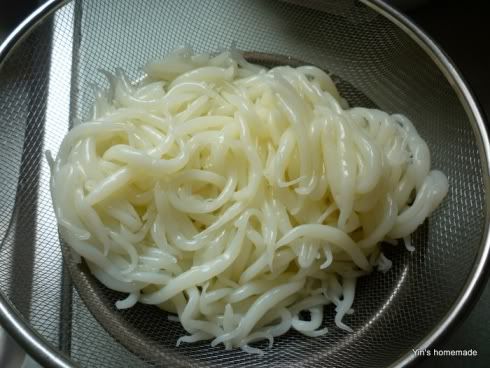
Hakka Lo See Fun (Rice Pin noodles) with Minced Pork 客家肉碎老鼠粉


Home-made authentic Hakka Cuisine - part one

Recently, I bought a new cook book by Agnes Chang – "Delightful Snacks and Dim Sum" and was happy to find some authentic Hakka dishes in it. One of them was this simple noodle recipe -Hakka Lo See Fun (Rice Pin noodles) with Minced Pork .

Lo See Fun, literally in Cantonese it means "Mouse Noodle", is a type of rice noodle. I guessed the pin shape noodle was named after its shape being similar to a mouse?


This rice noodle is easily available in South East Asia countries especially in Malaysia and Singapore. They can also be found in Taiwan known as "米台目"and in Hong Kong known as "銀針粉". However, I doubt they are available in the Western countries. When I was in Auckland I was not able to find them in shops. Thanks to a friend for sharing her homemade rice pin noodle recipe, we got to enjoy it while we were there. I will share this homemade noodle experience in my next post.

If you are not able to get this specific type of rice pin noodle, you can replace it with other types of rice noodles such as "Lai Fun" 濑粉 or Hor Fun (Koey Teoh) 粿条 or just any other types of noodles preferred.

However, if you wish to challenge yourself in making your own rice pin noodle. Check out this post Home made  Lo See Fun, credit to my friend Yenny who shared this with me during my days in Auckland.

Hakka Lo See Fun (Rice Pin noodles) with Minced Pork 客家肉碎老鼠粉

Sunday, March 13, 2011

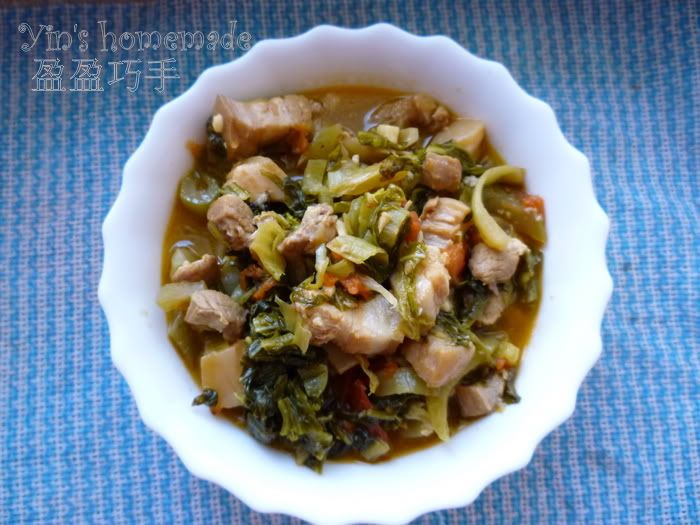
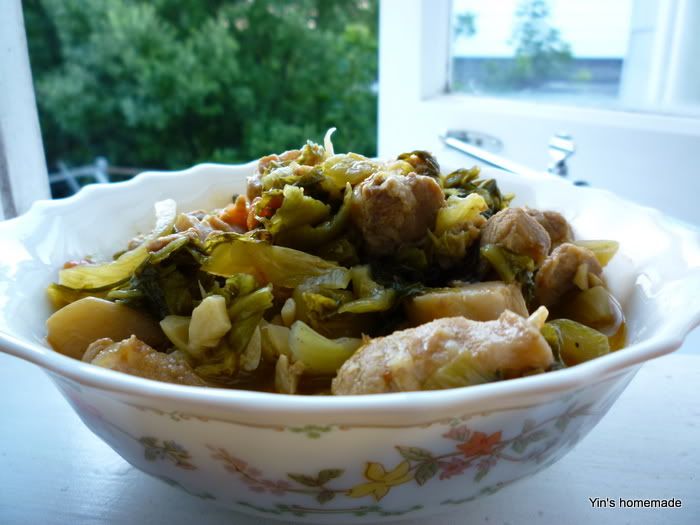
PORK BELLY WITH SALTED VEGETABLES 咸菜焖腩肉


Hakka Cuisine

This is another great Hakka dish that I grew up with, and one of my childhood favourites my mom often cooked at home. I'm glad that now my family loves this dish too.

PORK BELLY WITH SALTED VEGETABLES 咸菜焖腩肉


The sour and salty flavor of the dish is not only great to go with white rice but also with congee which is appetizing to eat during summer time. Looking for congee ideas? Click here.
PORK BELLY WITH SALTED VEGETABLES
Featured in Group Recipes - 13/03/2011


INGREDIENTS:
1 packet of salted vegetable
400g pork slices (cut into small strips and seasoned with 1 tbsp of soya sauce)
2-3 clove garlic, chopped
2 tomatoes, cut into wedges
½ tsp of sugar (to your taste)

METHOD:
  1. Soak salted vegetable in water for about 10mins, drain & cut into strips.
  2. Slice pork belly into thin strips.
  3. Heat wok with oil and sauté chopped garlic till fragrant.
  4. Add in the pork slices & fry till half cooked.
  5. Pour in salted vegetables and stir fry then add into tomatoes wedges.
  6. Add some water to keep ingredients moist, stir-fry to combine well.
  7. Reduce heat to medium and simmer for 10 minutes before transfer to slow cooker.
  8. Continue to simmer in slow cooker for 1 ½ hour or until pork slices soft and tender.
  9. If not using slow cooker, reduce heat further and continue simmer in wok with lid for about 30min – 45min or until pork slices soft and tender. Add more water if more gravy preferred.
  10. Taste test before serving. If you find too salty then add more sugar.  
咸菜焖腩肉


材料:

一包咸菜
400克猪肉
(切成小条切,
腌一汤匙的酱油)
2-3瓣蒜头,切碎
2个番茄,切块

半茶匙的糖(你的口味)


做法:

将咸菜洗净,切小段,腩肉切片,备好蒜末。将锅中放少量油,放蒜炒出香味, 下肉片煸炒成半热时,接着放咸菜,略微翻炒后加入蕃茄加入少量水再炒均匀,加盖焖10分钟后才加调味,盛出倒入慢炖锅继续焖至少一个半钟头或至肉柔嫩。
如果不使用慢炖锅,减少热量加盖继续在镬约30 - 45分钟,或直至猪肉片柔嫩。如果喜欢更多汁多补充水分。

Thursday, December 30, 2010

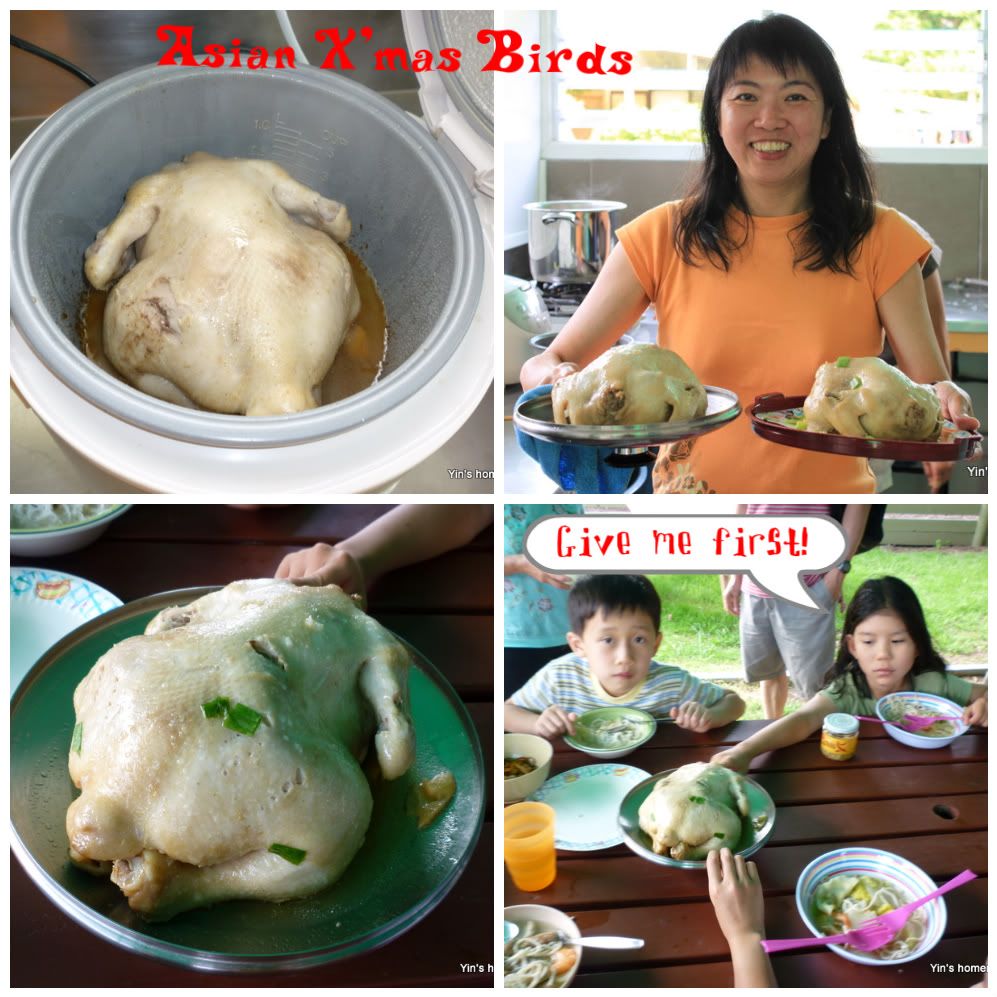
Hakka Rice Cooker Salt Baked Chicken 客家盐焗鸡

Asian Style Christmas Bird?

Few months ago my eldest brother sent me an email introducing the Salted Chicken which was a trademark of Hakka Cuisine. This dish reminded him of the salted steamed rice wine chicken (客家盐酒鸡) our mum used to cook for the Chinese New Year eve dinner when we were kids. Ever since our mum suffered from Alzheimer's and was admitted to a nursery care, we no longer had the chance to taste this dish. We missed that unique home brewed sweet rice wine flavored chicken. The sticky rice wine (自酿米酒) was home brewed by our mum. Her rice wine was popular among our relatives and friends for use in home cooking, especially well sought after in the Chinese after birth confinement diet。But it is sad I no longer have the chance to learn from my mother L

Seeing me getting interested in cooking and started off this food blog, my brother suggested me to learn up our Hakka cuisine and shared in this blog too. I reckoned this was a good idea and started to surf for related Hakka recipes, and then I came across this creative and modern way of making Hakka salted chicken.

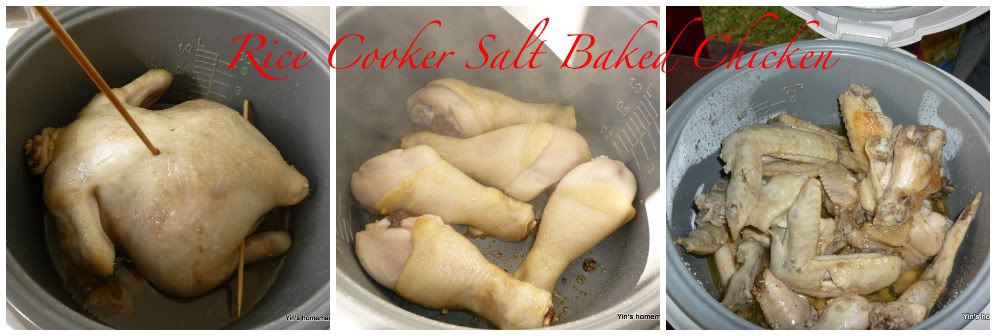
The traditional Hakka cooking method used parchment paper to wrap up a whole chicken, then buried it in a wok full of fried coarse salt and simmered till it was cooked; very arduous. This one however requires only a rice cooker to do the magic. This lazy people way of salt baking may not show the true flavor of Hakka Salted Chicken but it is surely a simple and healthy way to cook a chicken without compromising much on the taste.


Because I had a small rice cooker, I could only cook size 9, chicken. Instead of the whole chicken you can also opt for parts such as drumsticks or wings. I had attempted using chicken, wings and drumsticks. They all tasted flavorsome and not greasy. I served this chicken with Hainanese chicken rice. Of course no chicken rice is complete without the special chicken rice chilies, isn't it? J


Hakka Salt Baked Chicken 客家盐焗鸡 - Featured in Group Recipes 30/12/2010
This year, we celebrated our Christmas at Hahei Camp site with limited utensil and a very basic kitchen; I had used this recipe to make our very own Asian style Christmas birds for our Christmas dinner. J


LinkWithin

Related Posts with Thumbnails