Tuesday, February 28, 2012

Wholemeal Chocolate Marble Toast Bread 可可双色土司

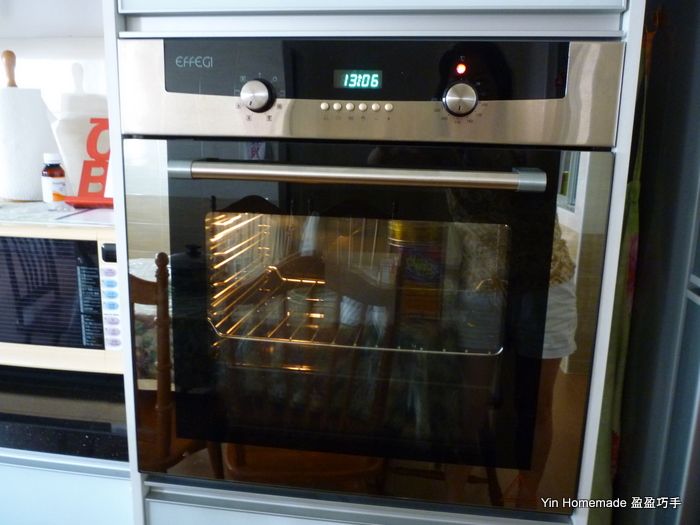
My new Oven is in action!
It has been a while since I last baked. Part of the reason was work while another was the condition of our house that underwent a major renovation for an extended period of time.
I was waiting to get the new kitchen ready with a new oven before I could start to try out new baking recipes. However, it took us more than 4 months to get the house ready before I could put on an apron to try out a new oven in a whole new revamped kitchen.
I was quite excited waiting to play with this kitchen new toy, thinking that I could finally retire my little desktop oven and shelved it in a storage room.  However, to my disappointment the very moment I switched on the oven, it tripped the power supply to the entire house! It took another few weeks for us to arrange for warranty claim and technical support to fix and reinstall the oven before I got to use it again.
Finally, we had a pilot by baking Vanilla muffins last month; Ming Ray was the main master chef in coming up with a successful batch of baking from the oven.
Subsequently, that night I used it for my signature roast pork.  The pork was a bit burnt out, as I was still trying to play around with the oven temperature. This new oven was a bit more sophisticated than the one I used in Auckland.  It had more heating functions, more choices of heating elements and if desired the option to turn on a fan to help circulate the heat inside the oven. I was not familiar with it initially, definitely far more complicated than my little desktop oven! J
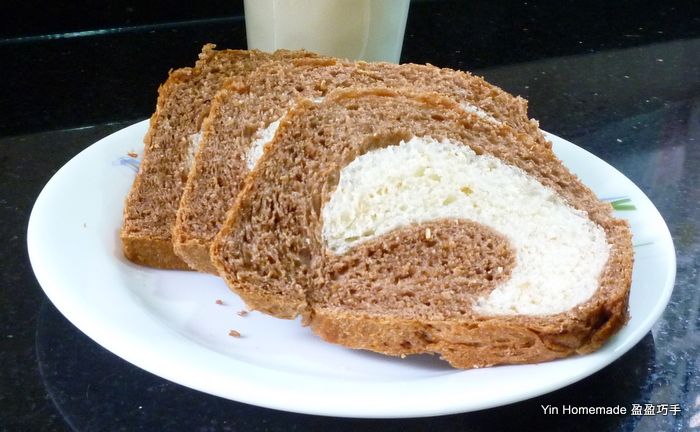
Last weekend, I finally made my 1st loaf of bread in 2012.  This was another recipe adapted from Tangzhong (water-roux) bread from Taiwan famous baker 孟老师的100道面包. If you’ve been following my blog you would know Tangzhong was one of my favourite bread baking method which guaranteed a soft and fluffy bread texture.
Actually this was not a new recipe to me, I did try this recipe back in Auckland in 2010, however it was a failure back then. (Read the post mortem report here).
This time, I didn’t follow the recipe exactly; I had made minor adjustments because some of the ingredients required was not available in my pantry. I left out cheddar cheese while making Tangzhong, I didn’t mix in chocolate chips and also replaced a portion of high protein flour with wholemeal flour. I wanted to get rid of the balance of 30g wholemeal flour which I had on hand.
Nevertheless, when I saw the dough rise nicely, I knew these minor adjustments wouldn’t matter much. True enough, the bread came out nicely, soft and fluffy and the brown and white swirl of marble look effect gave great color combination.
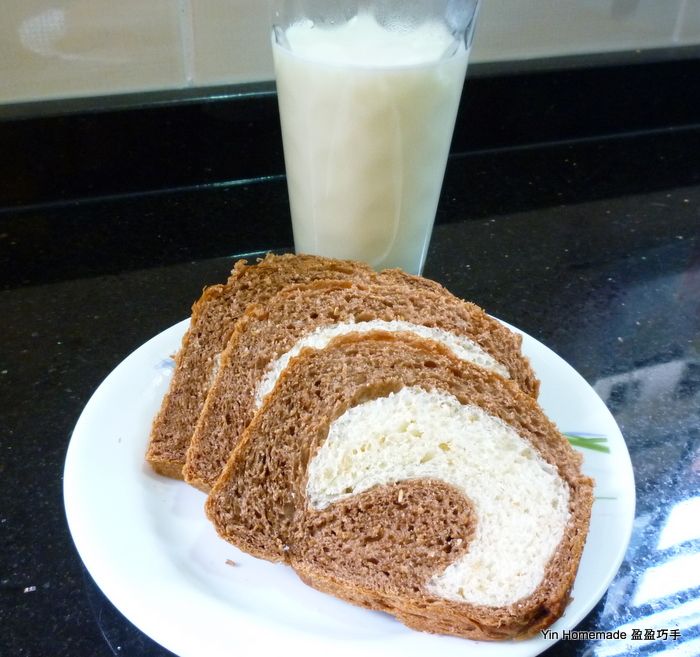

Overall, the bread tasted not as sweet as expected as I didn’t place any chocolate chips. The sweetness of the bread depends on the kind of chocolate chips added in and the coco powder used. If milk chocolate chips or sweet coco powder is used, it will be sweeter. I found even if it was not sweet it was still good to eat on its own. J

Sunday, February 19, 2012

Teochew Style Steam Fish 潮州式蒸鱼

年年有余() To be abundant, to be plentiful year after year
I know this post comes a bit late since Chinese New year was over for 2 weeks now, better late than never I guess. J
It is customary for Chinese to have a feast of symbolic dishes to welcome the Lunar New Year. There are a few “must serve” auspicious-sounding dishes during the Chinese New Year Eve "Family Reunion Dinner". Other than the usual chicken, duck and pork, fish is one of them that plays major role in festive celebrations.
Fish in Mandarin is pronounced as “Yu".  A homonym of fish, is the word abundance/surplus (). Hence it is a Chinese ritual to serve fish during the reunion dinner to signify a wish for abundance and plentiful harvest year after year年年有余 (nian nian you yu). In addition, the fish is to be served whole, with head and tail attached, symbolizing a good beginning and ending for the coming year.
For this dragon New Year, it was our first CNY since we got back from Auckland. We were delighted to have a bigger group of 30 family members in celebrating reunion dinner. We joined my dad along with all my brothers and sister and her in-law Lee’s families’ to dine at Red Rock Hotel, Tian Tian Restaurant.

The following were some of the signature New Year dishes we had from our 8 course sumptuous reunion dinner.
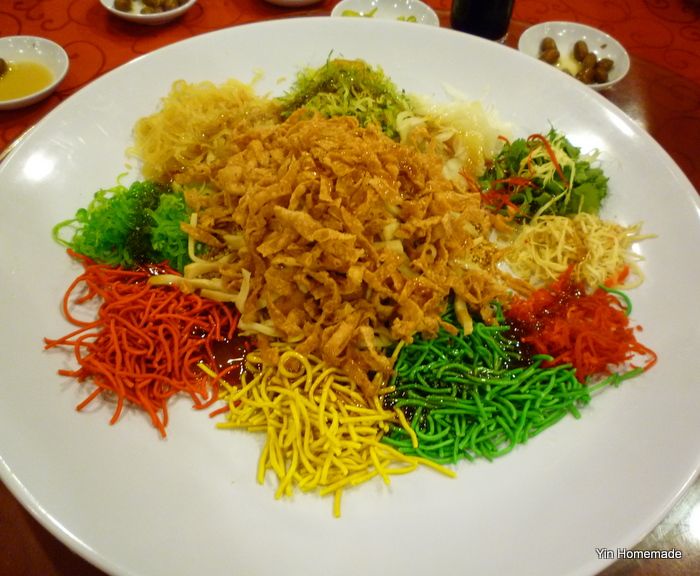
Prosperity salmon Yee Sang
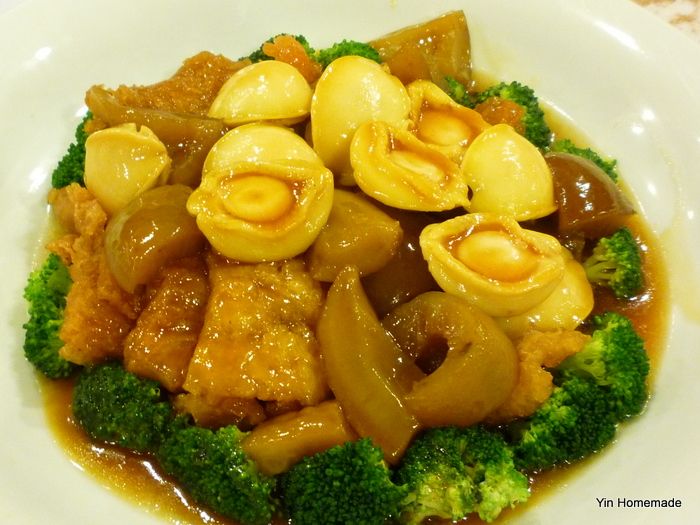
Braised abalone, sea cucumber, mushroom and broccoli
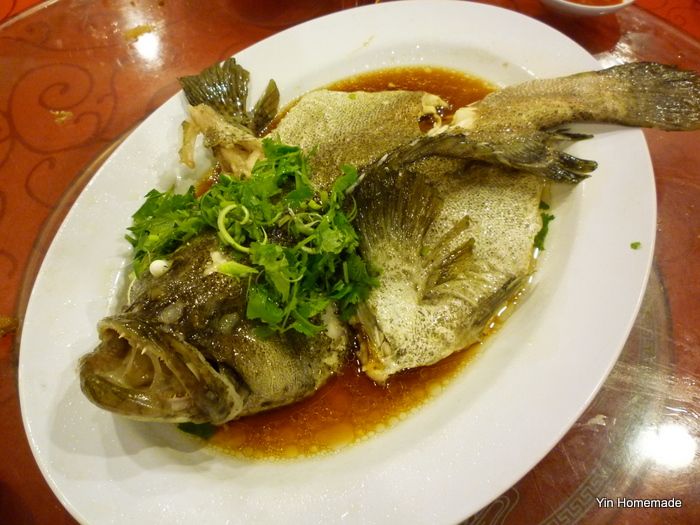
Last but not least the FISH!
Soya sauce steamed grouper
For the 2nd day of CNY, my 2nd sister-in-law suggested to have simple homemade family lunch at home.  In view of the fact that during the first few days of Chinese New Year, dining out was very difficult because many restaurants were close for the New Year break, I gladly supported her idea and contributed my help in the kitchen.
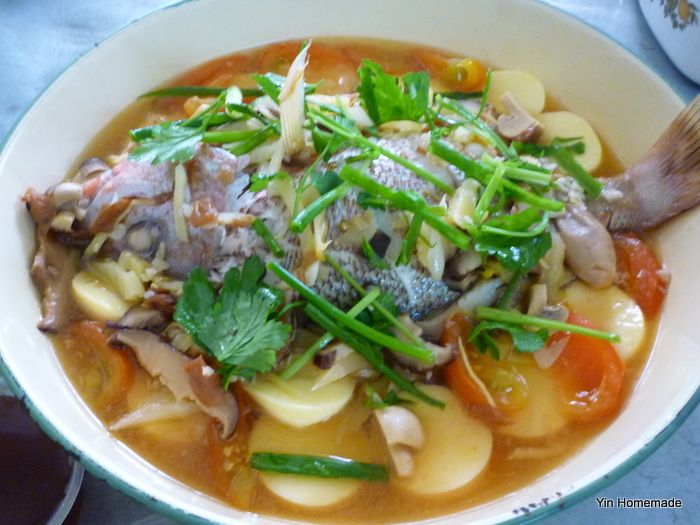
The following was one of the dishes that I helped my sister-in-law to prepare. Steamed fish in Teochew Style, a favourite steam menu I often cook at home.
Teochew Style Steam Fish 潮州式蒸鱼

Tuesday, January 31, 2012

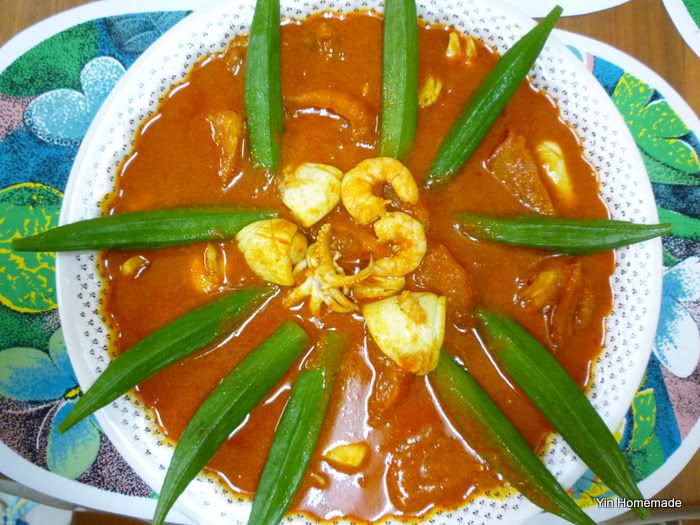
Assam Sambal Seafood Curry 亚参三巴海鲜咖哩


Wanna a bowl of Nyonya curry to spice you up?

As promised, here is the recipe that will spice you up using the Sambal Belacan Chili paste prepared in my previous post.
The following version of seafood curry is more like the Nyonya style where Assam was used instead of coconut milk. Assam in English means tamarind. With tamarind as one of the ingredients, you can expect this is a sour and spicy curry. J
Once you have this ready homemade sambal chili paste stocked up in your pantry, whenever you yearn for curry, you can have it in less than 30 minutes and without the concern of unhealthy preservative in the food.
This round of seafood curry, we used squids and prawns.  Basically you can use any seafood to your liking. For fish you can check out my previous curry recipe Assam Stingray which also used the same homemade chili paste.
Let’s cook healthily and eat healthily!

Saturday, January 28, 2012

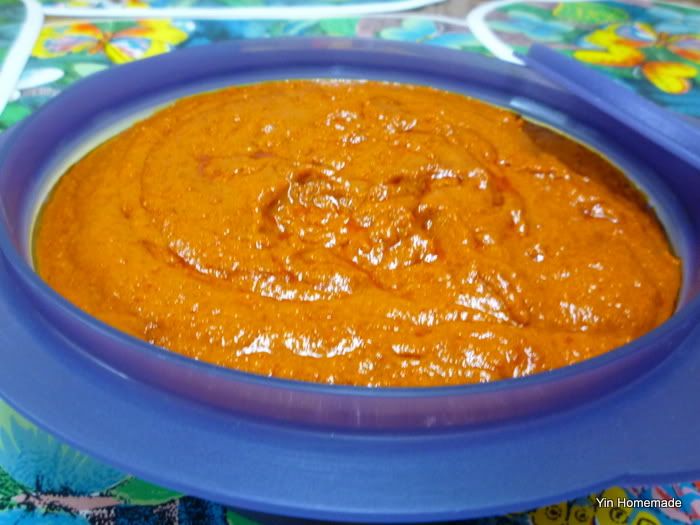
Sambal Belacan Chili paste三巴峇拉煎辣椒酱

Sambal is one of the most popular spicy condiments used in Southeast-Asian-influenced cuisine. Belacan is a Malay word.  It means dried shrimp paste. Sambal Belacan is dried shrimp chili paste. For Malaysian, Indonesian and Singaporean spicy food lover, sambal is one of the common spices easily found in their pantry. Due to the modern lifestyle many people opt to buy pre-packed readymade spices.  However considering the side effects of food preservatives, why not spend a little effort to make our own healthy Sambal Belacan paste?

Sambal Belacan Chili  Paste - Featured in Group Recipes 28th January 2012

The following is a recipe from Auntie Lan.  Again I’m only sharing the main ingredients.  Apologies for not giving detailed measurement as I didn’t manage to weigh the ingredients before she started to grind the paste. You can roughly adjust to your own liking. The following photo showed the measurement of half portion of the ingredients.  To get fine texture, we grind the ingredients in two batches.
We used blender to grind the chili ingredients. It may be too much of asking to follow the traditional custom using stone mortar to pound the chili into paste. However, sambal made using stone mortar is supposed to taste much better.  

If you wish to know how to use this chili paste, stay tune for my next post, coming soon! J

Saturday, January 21, 2012

Happy 2012 Chinese New Year 龙年行大运

Wishing You and Your Family A Happy, Healthy & Prosperous Dragon Year!


心迎春庆团圆
想事成万事利
业安居步步升
马精神朝气旺
运财运齐亨通

Tuesday, December 27, 2011

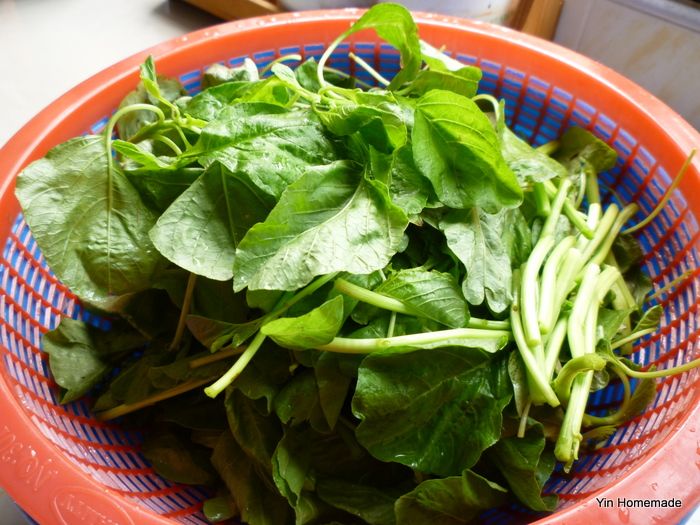
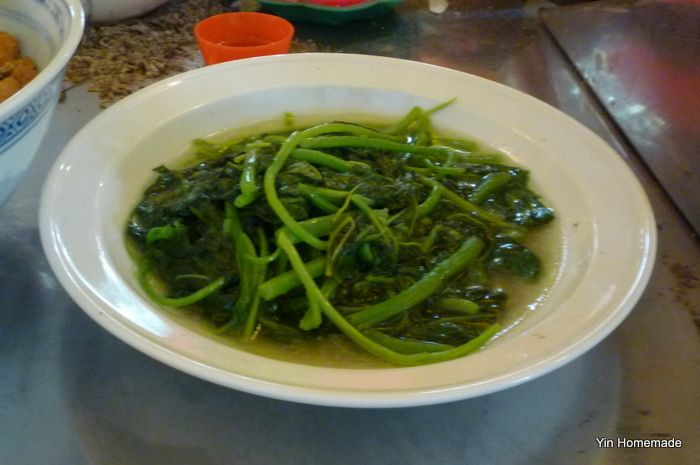
Spinach 苋菜


I made this dish for her funeral ceremony. I was sad I didn’t have the chance to cook this dish for her when she was alive as she was on tube for the last 3 years because she was not able to consume any solid food. However, as Chinese believe in after life, I hope her spirit got to appreciate what I had prepared for her.


In addition to stir frying, spinach is good to serve in soup or even in porridge. Spinach is a great veggie to introduce to children because it has no earthy smell. I used to blend in spinach in Ray’s porridge when he was a baby.  Popeye the sailor man turns into a strong guy after consuming a tin of spinach, you kids will be the same too! J

Wednesday, November 9, 2011

Hand pulled Noodle/Lamian 手拉面

Lanzhou Lamian (兰州手拉面)
Recently on a business trip to China, I had a little pleasant culinary surprise at Suzhou.  One day I had a busy morning and ended up with a late lunch. I normally did not like to eat rice for lunch, so when I saw a small eatery noodle house nearby, I suggested to my colleague to try out their noodles. It was a small Xinjiang Muslim halal eatery shop tucked away in a little corner not easily noticeable. To our blessings, we ended up tasting a really delicious and authentic Lanzhou hand pulled noodle (lamian) !
While waiting to be served, I even sneaked inside their kitchen to shoot a video of the making of Lanzhou lamian. Inside the kitchen, I noticed the chef was just a young chap; I was so impressed to see him skillfully pull and twist the dough and within seconds a ball of dough was magically transformed into fine smooth noodles!
After some online research, I realized that the word Ramen that I used in this video clip is not the same with the word Lamian, the first referred to Japanese noodle and the later meant for Chinese hand pulled noodle. I had used wrong title in my video clip, it should be Lanzhou Lamian instead.
After I returned to Malaysia, I wanted to challenge myself to hand pull a bowl of noodle/lamian too!  After spending some time researching online for noodle recipes, finally during the Hari Raya Adiladha long weekend I made my 1st attempt.
For this endeavour, I must admit I didn’t hand pull the noodles entirely.  I opted for the cutting method, where I first rolled the dough out flat and then cut the dough into fine stripes with a dough cutter.  Then I slightly hand pulled the dough into finer longer noodles. This method was recommended for home maker especially for beginners. I didn’t have the magical hands like the young chef I met in Suzhou; however the outcome was still reasonably acceptable.
After some efforts in trying to pull and twist the dough, finally I managed to come up with a bowl of reasonably presentable and springy noodle. I got a “pass” from my hubby and auntie Ah Lan and a “good” from my sweet boy Ray, phew!
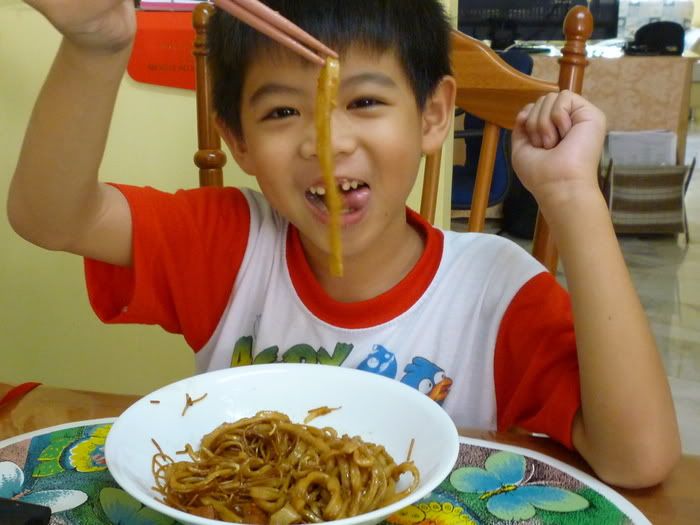
Ray showing off his newly learnt skill - eating noodle with chopsticks. 
Stir fried ramen with pork mince and veggie
 
For my next batch of handmade noodle, I would add in slightly more water and salt to the flour to improve the texture of the noodle to make it more elastic and not so easily breakable when pulled.
However, instead of pulling by hand I’m considering to invest in a small pasta/noodle machine! J

LinkWithin

Related Posts with Thumbnails