Showing posts with label CNY. Show all posts

Tuesday, March 3, 2015

2015 Chinese New Year Cookies 杏仁片脆饼

羊年吉祥!

Today is the 13th day of Chinese New Year ( CNY), I hope I am still not too late to wish all my Chinese readers and friends a very happy and prosperous Chinese New Year “ Gong Xi Fa Cai”. As this year is the year of “Goat”, I wish all of you everything very “goat” ( good! )

IMG-20150219-WA0017[1]

In the beginning of the year, I had many plans in attempting to make different types of Chinese New Year cookies as New Year gifts to friends and relatives. However, due to recent hectic work schedules all those plans ended down the drain. clip_image001

However, since I started this blog, it has been customary for me to introduce at least a Chinese New Year dish or bakery to cheer up the new year atmosphere.

Following are the 3 types of common snack food serve during CNY, I managed to make out from my tight schedules.

2015cnycookies

Almond flakes crisps 杏仁片脆饼, sesame crisps 芝麻脆饼 and crispy filament crab sticks that I made in the very last weekend before rushing back to celebrate CNY with my family in Penang. Due to the time constraint, I didn’t manage to make them in large quantity but only 4 small containers for my sister-in-laws and the occasion my high school reunion gathering.

I was glad these finger foods received good comments.

The easiest was the making of crispy filament crab sticks, by just drying up the filament crab sticks under the sun for 1-2 hours and unrolled into strips and deep fried in medium heat oil. Once the oil was heated up and bubbling, the crab meats were added and heat reduced to brown until crispy. No seasoning needed as the crab sticks were already flavoured.

filamentcrabstick_collage

For the Almond and Sesame crisps, these were basically the same cookies, with different spread sprinkled over the top of the cookies. This round I used almond flakes and white sesame seeds. You can opt to use pistachio, sunflower seeds, black sesame too.

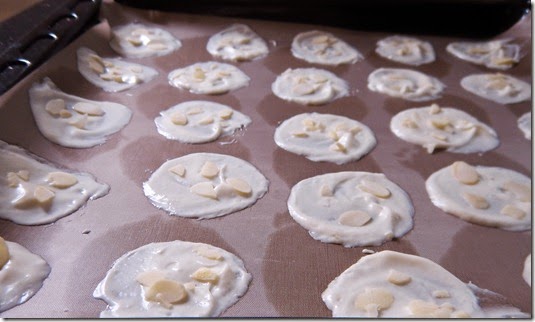
Just a note to highlight, to make really crispy almond crisps, do make sure to spread the batter thinly. Also must make sure you use parchment paper or silicon or fiberglass baking sheet for ease of removal of crisps once it comes out from oven or else you will have difficulty removing the cookies from the baking paper.
DSCN1013

Initially, I had a failed attempt when I used normal baking paper resulting in my first batch of sesame crisps being stuck and cannot be removed from the baking paper. I had to carefully remove the crisps with a small knife by scraping them off one by one from the baking paper. At the end many crisps were cracked in the process.

For the second batch I bought a fiberglass baking sheet and I was relieved to be able to remove all the crisps nicely in one piece.

Believe it or not, these egg whites crisps are unbelievable additive, just one bite and I think you'll agree!


DSCN0936

DSCN1020

Almond Flakes Crisp


DSCN1017

Ingredients:

4 egg whites ( about 140g)

110g icing sugar
80g low protein flour (cookie flour)

100g Almond flakes
60g butter (melted)


Method

  1. Preheat oven at 160 degree Celsius for 15 minutes.
  2. Beat egg white and icing sugar till fluffy and soft peak.
  3. Add melted butter and flour use a spatula to gently combine well.
  4. Line a baking tray with parchment paper or fiberglass baking sheet.
  5. Spoon batter (1tsp) onto the lined tray and use the back of spoon to spread the batter to round thin and even layer.
  6. Sprinkle with a little almond flakes or Sesame or chopped pistachio.
  7. Bake at pre-heated oven at 160C for 12-15mins or until all evenly golden brown.
  8. Remove the crisps from the tray once out of the oven while still hot.
  9. Store in air-tight container once cool.


杏仁片脆饼


材料:

烤盤布 (鋪底用.烤好易脫餅且不沾黏又能重複使用)

牛油60g

4粒蛋白 (140g)

110g

低筋麵粉80g

杏仁片 100g


作法:

1.      烤箱設定160度預熱15分鐘。

2.      蛋白加入糖粉,拌打至發,加入融化的牛油和過篩的低筋麵粉再輕輕拌勻成面糊。

3.      烤盤鋪一張烤盤布或不沾纸,盛一小湯匙面糊在烤盤布上再用湯匙將其鋪平均愈薄愈好。

4.      撒上少许杏仁片或芝麻 或开心果片。

5.      放入預熱烤箱,以160度烤12-15分钟至呈金黃色即可出爐。

6.      一定要趁熱將脆饼移放在烤架上待涼。

7.      冷卻後記得裝入密封罐內存储


Sunday, February 9, 2014

Scramble eggs with Shark’s fins and Crab meat ( 鱼翅炒)

First of all I would like to wish all my Chinese readers a very happy Chinese New Year!
May you be blessed, in this horse year, with good health, galloping like a champion horse to a great  height of success!
30294-Vector-Horse-2014-Chinse-logo
This year CNY day-1 lunch, my second Sister-in-law has suggested to try out this simple scramble eggs with the luxurious filling of shark’s fins and crab meat as it seemed to be a simple and fast egg dish which was kids friendly!

This Shark’s fin scramble eggs is one of the popular Nyonya cuisine dishes served during Chinese New Year reunion dinner. It is also commonly served in Chinese Wedding banquets where it usually forms part of the hot & cold combination platter served as starter with the name of Four Season.
I happen to bring back a copy of Food Magazine “ Yum Yum” featuring mostly Chinese New Year dishes and we found this recipe in there. On the Chinese New Year Eve night, SIL has briefly glanced thru it but didn’t really remember the all the steps.

The next day, CNY day-1, after finishing our ritual prayer at temple, we went back to dad’s house to prepare lunch. It was too bad that, I forgot to bring the recipe book. Hence, she just had to improvise whatever she couldn’t recall to prepare the dish. In the end, our version turned out to be  more like scramble eggs with veggie instead because we added a bit too much of onion, spring onion and cabbage we could hardly see the shark’s fins in it.

Nevertheless, it still tasted great! Smile

sharkfin_char2
This dish can go with white rice or be wrapped with lettuce or placed in this “top hats” or Nyonya kuih pie tee.

For the recipe of how to make this crispy Pie Tee, do click on the link to one of my favorite food blogger site - Rasa Malaysia.
sharkfinchar_tapee2
Our home cooked CNY lunch main dishes, scramble eggs with shark’s fins, braised sea cucumber, mushroom and pork trotter.
cnyday1lunch

Monday, February 25, 2013

Tomato Garlic Prawns 鸿运当头笑哈哈(虾)

laughing prawns for an auspicious and happy reunion meal!

10th February 2013
1st lunch of Lunar Calendar year of Snake (农历大年初一)- Part 2

This Snake year, we had our family reunion dinner on the 9th February, the eve of the New Year, at the Penang Chinese Recreation Club (CRC) Restaurant. As expected this reunion package dinner set menu served many auspiciously sounding dishes such as Yee Sang 撈鱼生, Shark’s fins, Steamed fish (nian nian you yu 年年有余(鱼) symbolising abundance in Mandarin, along with Steamed prawns 笑哈哈), with prawns homophonic to “laughter” in Cantonese and last but not least deep fried Nian Gao 年糕 (steam sticky rice cake) as dessert. To me, no matter how lavish and sumptuous the reunion dinner we could have in a restaurant, there was still something missing in it, the “home” feel taste!

2013cnyreuniondinner

Other than Pen Cai as featured in my previous post on our reunion CNY lunch at home, we had another seafood dish in the same lunch menu. My sister Cindy had brought some big prawns. We decided to use some for the Pen Cai and the rest went to this Stir fried Tomato Garlic Prawns, our homemade “laughing” prawns. Prawns in Cantonese as I mentioned symbolises laughter which is another must serve in the CNY menu.


tomatogarlicprawns4
Tomato Garlic Prawns 鸿运当头笑哈哈(虾)

Following was the lunch menu that we served on that day:
Hakka Pen Cai, Teo Chew Steam Fish, Tomato Garlic Prawns and Pig and Fish Maw soup
(Click on the name to bring you to my old posts on these recipes)


The recipe I shared below was super easy. Even if you are a novice in cooking, you should still be able to come up with a very nice and tasty CNY dish in 3 simple steps! The secret is to have this sauce - Lee Kum Kee Sauce for Tomato Garlic Prawns clip_image001
 P1100916

在粤语中的“虾”听起来就像“哈“寓意笑哈哈, 是其中一道不可缺少的新年宴客菜。这一道酸甜番茄蒜茸大虾,做法简单也省事儿,而且红彤彤的很有节日气氛。 零厨艺的你也可在新年家宴上大显身手了来个鸿运当头笑哈哈(虾)!
 

Monday, February 18, 2013

Hakka Pen Cai (客家盆菜)

Traditional Hakka Cuisine – Come and enjoy a big bowl feast    

10th February 2013
1st lunch of Lunar Calendar year of Snake (农历大年初一)- Part 1

In contrary to the wide choices of Chinese meals available at various food outlets during the eve of CNY, it was hard to find any decent Chinese meals on the first and second day of CNY; not even the Chinese hawker/street foods! In Penang, many of the Kopitiam, hawker centres and restaurants would close for at least 2 days before resuming business on the third or fourth day of CNY. Having our CNY lunch at home on the first day was almost always our only alternative.

Since Mum’s passing, my second sister-in-law, Lai Cheng has taken over the task of manning her kitchen during festive days. With my return, she was so glad to have extra helping hands in preparing the CNY lunch. This year, when I noticed she had bought some expensive seafood materials such as sea cucumber, frozen baby abalone and fish maw, it gave me the idea to make them into Hakka Pen Cai, the deluxe version as compared to what was usually served in restaurants.

Pen Cai (盆菜) or Big Basin Feast is one of Hakka delicacy cuisine commonly served during CNY, or other festive days and weddings. This communal dish was made popular by Hong Kong New Territories Hakka Village. Hakka people in the olden days mostly resided in the hills and was well known for their frugal lifestyle.

The original version of Pen Cai only used basic and fresh ingredients that were easily available from their farms, i.e. vegetables, chicken, duck and pork.  However, nowadays this dish has transformed into an exotic and lavish dish by restaurants with the addition of seafood such as oysters, abalone, sea cucumber, fish maw and scallops. 
Restaurant Pen Cai
Restaurant Pen Cai - Deluxe version
Preparation of Pen Cai might seem tedious. All the ingredients were first cooked in different ways such as deep frying, stir frying, stewing and steaming before being laid into a big wooden or metal basin, layer by layer.

I did some Google search for the recipes on how to cook sea cucumber, baby abalone and fish maw. I seldom used these expensive ingredients and was afraid I might ruin them. Frankly, it was kind of an impromptu decision to try out this dish. We didn’t have quite a few of the usual Pen Cai ingredients such as variation of vegetables and bean curbs, so we had to make do with whatever veggies we had in the fridge.

I was glad that JS gave us a hand in arranging the cooked ingredients into the metal basin. The reason why I asked hubby to take over this task was because when in Auckland, there were stalls serving Chinese food in buffet style charging by per serving by the size of the plate. We would pay for the price of a single serving regardless of the amount of food stacked on the plate. JS always managed to stack so much food in that small plate that many times made such meals good value for money!

Shared below was the homemade Hakka Pen Cai (客家盆菜) that we improvised from the ingredients that we had on hand. In fact, to me Pen Cai had no fixed recipe; you can opt to put in any ingredients you like in the basin.

What’s more important was how to arrange them in a basin. The key to note was to ensure the absorbent ingredients at the bottom of the basin. Traditionally, the bottom layer was always stuffed with vegetables with plain taste such as Chinese cabbage, radishes, pigskins and bean curd. The middle layers were usually pork and Chinese dried mushroom. On the upper part of Pen Cai, meat, seafood and luxurious ingredients such as abalone, oyster, scallops and sea cucumber were placed.


Don’t be put off by the long and daunting list of the ingredients and steps. Though preparing Pen Cai can be tedious and time consuming, I think it is still acceptable to do it once a year.


P1100921
Pen Cai 客家盆菜 - Yinhomemade version
  10022013_cnylunch So, what were the feedbacks from my family members? clip_image001[1] by our nephews and nieces except the baby abalone which was slightly overcooked with rubbery texture and the gravy not being thick enough.

Next year, SIL and I had planned to make it more flavourful with proper veggies and added with more meat and starchy gravy!  cnycooks

Saturday, February 9, 2013

Happy Chinese New Year 2013


Just want to wish all my Chinese friends and readers a prosperous, harmonious and healthy Snake year ahead!

新的一年,

愿您抱着平安,

拥着健康,

揣着幸福,

携着快乐,

搂着温馨,

带着甜蜜,

带着财运,

拽着吉祥,

迈入新年,
快乐度过每一天!

As usual we will be heading back to my hometown Penang for Chinese New Year celebration with our family members.
In fact, by the time I finished typing this post it would leave us just 7 hours before we hit the road. Fingers cross for traveling in odd hours of 4am in the morning, and we would be able to avoid the traffic jam. 
I knew that I had been lagged in my kitchen; I had to admit that I had not made any special preparation for this Chinese New Year (CNY) at all due to work commitment.  However, I will try to come out with some CNY dishes when we are back from Penang for Chap Goh Mei the 15th of CNY (元宵节) celebration.
To make up, sharing below are some of the old CNY dishes I introduced before. Click here to go to the posts.


Sunday, February 19, 2012

Teochew Style Steam Fish 潮州式蒸鱼

年年有余() To be abundant, to be plentiful year after year
I know this post comes a bit late since Chinese New year was over for 2 weeks now, better late than never I guess. J
It is customary for Chinese to have a feast of symbolic dishes to welcome the Lunar New Year. There are a few “must serve” auspicious-sounding dishes during the Chinese New Year Eve "Family Reunion Dinner". Other than the usual chicken, duck and pork, fish is one of them that plays major role in festive celebrations.
Fish in Mandarin is pronounced as “Yu".  A homonym of fish, is the word abundance/surplus (). Hence it is a Chinese ritual to serve fish during the reunion dinner to signify a wish for abundance and plentiful harvest year after year年年有余 (nian nian you yu). In addition, the fish is to be served whole, with head and tail attached, symbolizing a good beginning and ending for the coming year.
For this dragon New Year, it was our first CNY since we got back from Auckland. We were delighted to have a bigger group of 30 family members in celebrating reunion dinner. We joined my dad along with all my brothers and sister and her in-law Lee’s families’ to dine at Red Rock Hotel, Tian Tian Restaurant.

The following were some of the signature New Year dishes we had from our 8 course sumptuous reunion dinner.
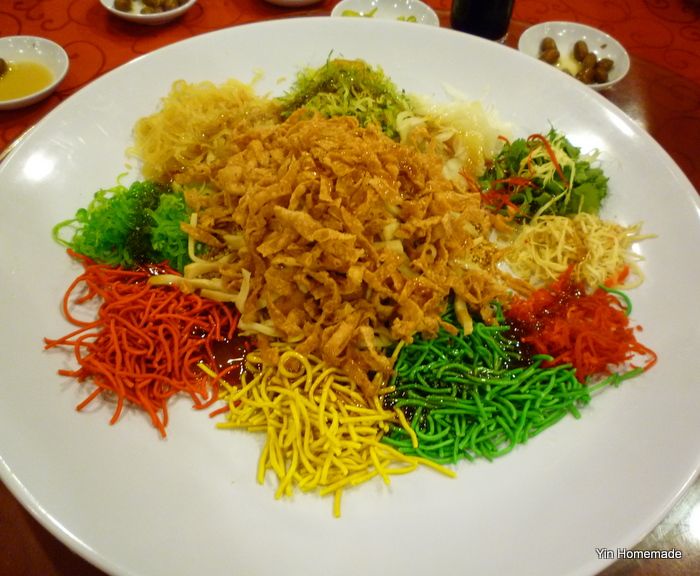
Prosperity salmon Yee Sang
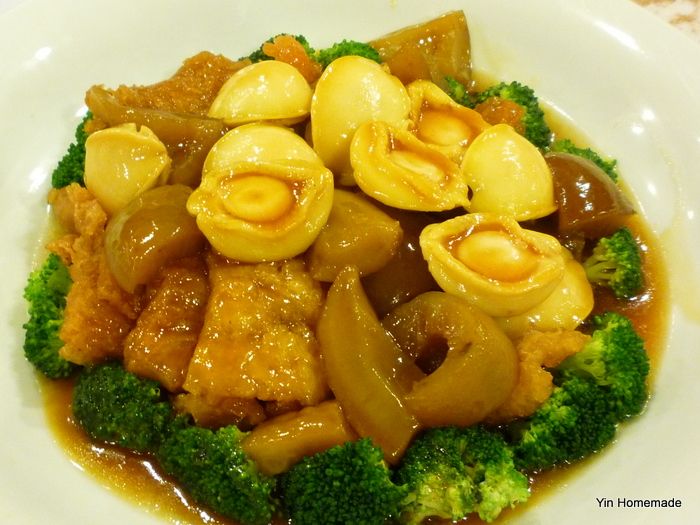
Braised abalone, sea cucumber, mushroom and broccoli
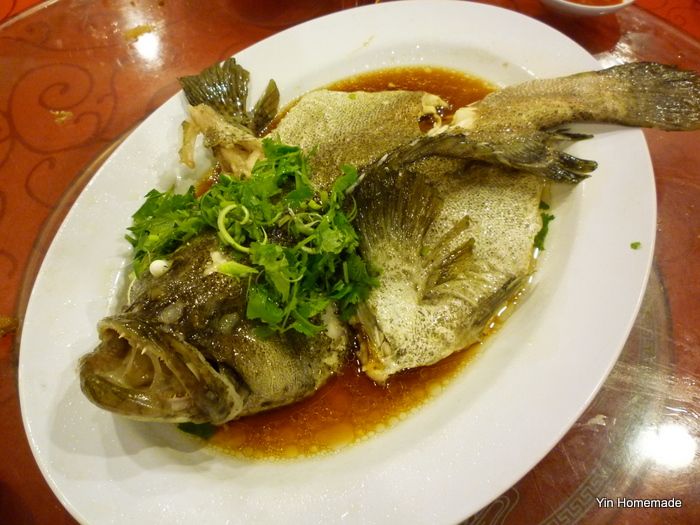
Last but not least the FISH!
Soya sauce steamed grouper
For the 2nd day of CNY, my 2nd sister-in-law suggested to have simple homemade family lunch at home.  In view of the fact that during the first few days of Chinese New Year, dining out was very difficult because many restaurants were close for the New Year break, I gladly supported her idea and contributed my help in the kitchen.
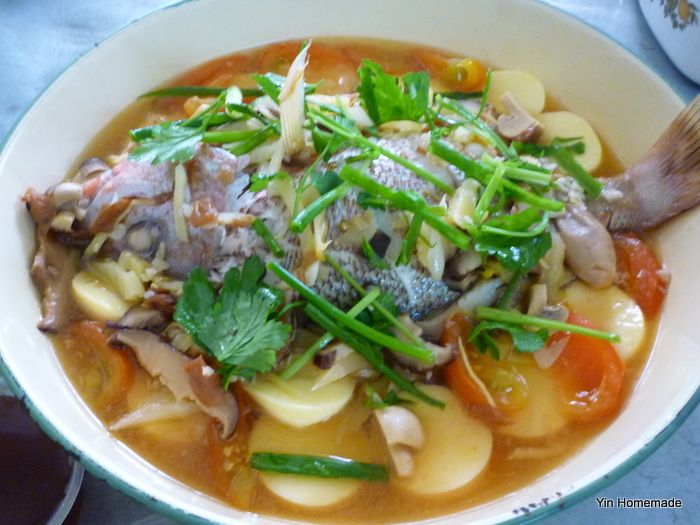
The following was one of the dishes that I helped my sister-in-law to prepare. Steamed fish in Teochew Style, a favourite steam menu I often cook at home.
Teochew Style Steam Fish 潮州式蒸鱼

Saturday, February 12, 2011

Yee Sang 鱼生


Chinese New Year Dishes – Part 5(年菜之五)

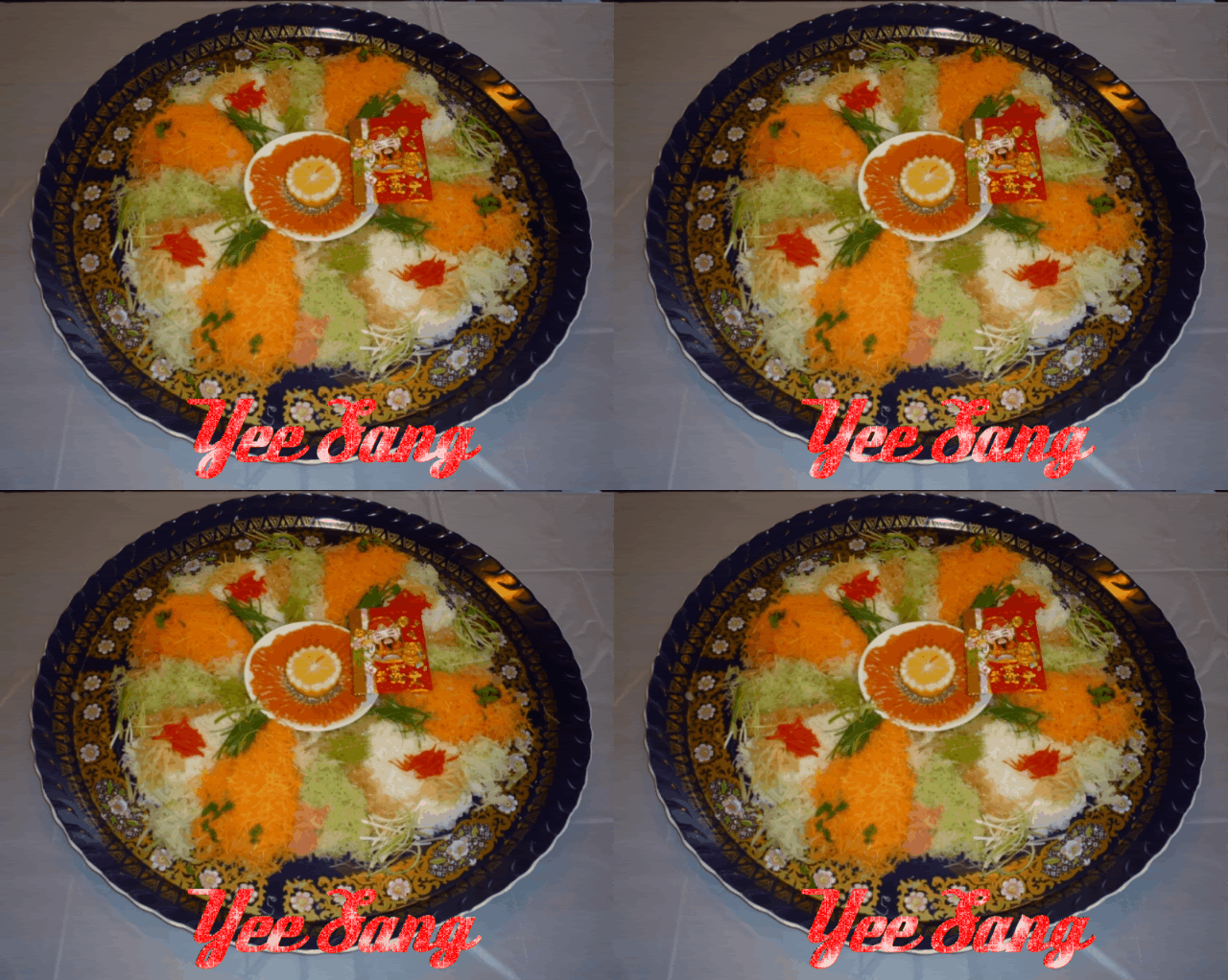
Last Wednesday 9th February was the 7th day of Chinese New Year (年初七)which literally regarded as Man's day "Yan Yak"(人日). Back in Malaysia many would celebrate the day with "Lo Yee Sang" (撈鱼生), a luck bringing Asian salad with various shredded colorful vegetables and assorted toppings with sweet plum sauce and strips of raw fish.

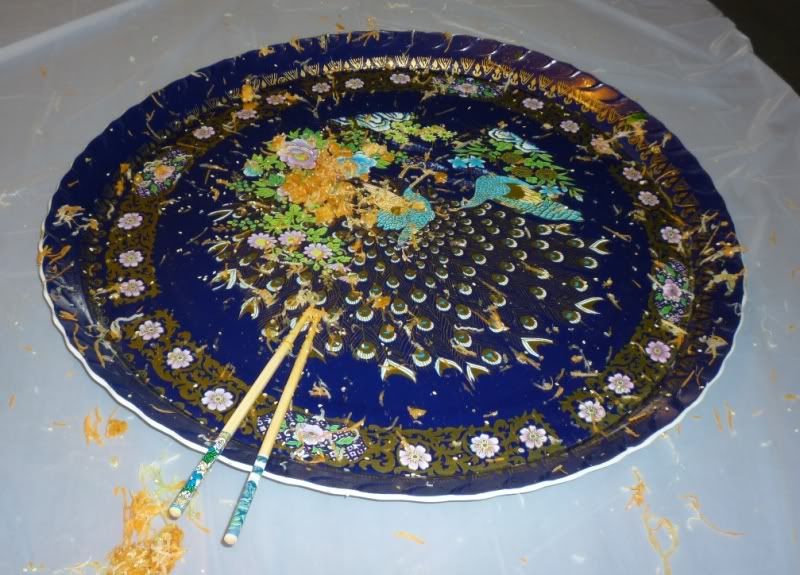
Many find the ritual of stirring with chopsticks and the tossing of the salads high up into the air, interesting. The height of the toss symbolizes the diner's growth in fortunes and career promotions while the fish in the dish symbolizes "abundance", as in Mandarin fish is pronounced as "Yu" with its homophone "surplus (余)" (年年有余 ).


"Lo Hei” (Cantonese 撈起)
Toss as high as possible, the higher the better

Shown below was the Yee Sang made by Pauline of my Auckland wives club during last year CNY pot luck gathering at Yenny's house.

Yee Sang 鱼生


Adding toppings and plum sauce, ready to toss!


Pauline (right) and host Yenny (left) @ 20/02/2010
You can tell how delicious the Yee Sang was!
The dish I brought over - Braised eggs and Mushroom,Braised Pork Hocks, (横财就手)
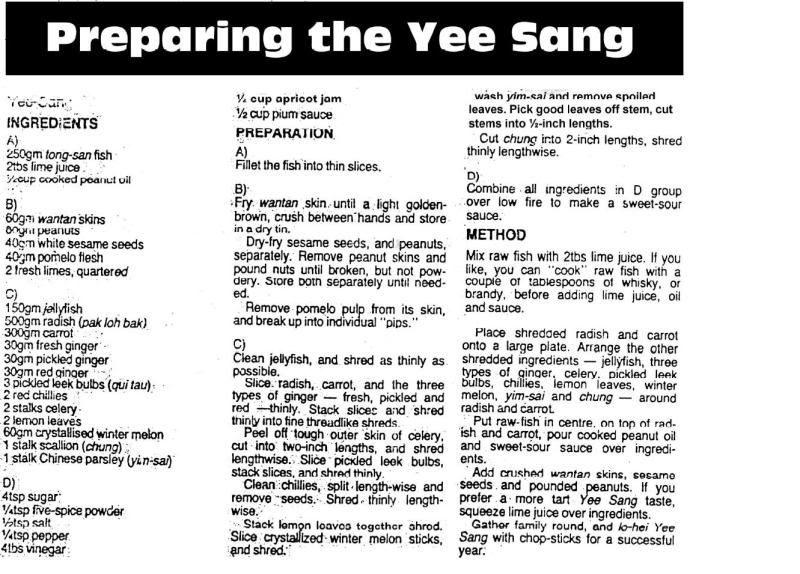
This salad dish may seem easy to make as it requires not much cooking except deep frying some of the topping ingredients. However, you might be put off by the preparation of cutting various veggies into fine long strips which might be a challenge for your knife skills. Alternatively if you can get hold of a special vegetable peeler with teeth like julienne slicer/mandolin for shredding vegetables, then it will be much quicker. For Yee Sang, it is important to grate veggies into long fine strips as the length symbolizes longevity. J

Unfortunately, this year we did not get to taste this mouth watering appetizer again as she was away for holiday. Below is the recipe forwarded by her to us where she adapted from a newspaper by author Thong Yoke Me.


Note:
1) As for fish, you can use fresh salmon, tuna sashimi or even abalone.
2) To avoid having the Yee sang being too soggy, you might need to squeeze about half the liquid from the carrots,
radish and celery, using a new men's size handkerchief will do the trick.

Friday, February 11, 2011

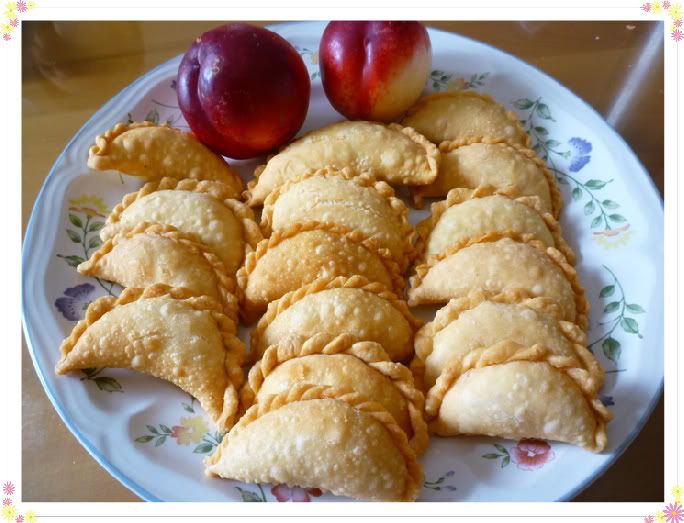
Crispy Dumplings (Kok Chai) 油角仔


Chinese New Year Dishes – Part 4(年菜之四)

Last Thursday (3rd February) was the first day of 2011 Chinese Lunar Year, the beginning of the Rabbit year. First day of Chinese New Year (年初一)to me is a very special day, because I was born on this day too! When I was small, my mum used to celebrate my lunar birthday together with family reunion dinner on this day. I always like to think that when the whole world is celebrating CNY, they are celebrating my birthday too! J

I was disappointed, but expected, to note Chinese New Year was not observed as public holiday here. It was a normal working for JS. After a long summer break, Ming Ray began his first school day of year-2 on this day too. With them away, we weren't able to have much family celebrations, but I still followed the Chinese culture, by giving Ming Ray a red packet "Ang Pao" before sending him to school. However, thanks to my ex-computing cooking group, I still had an enjoyable CNY lunch sharing cum a small birthday celebration on this day after all.

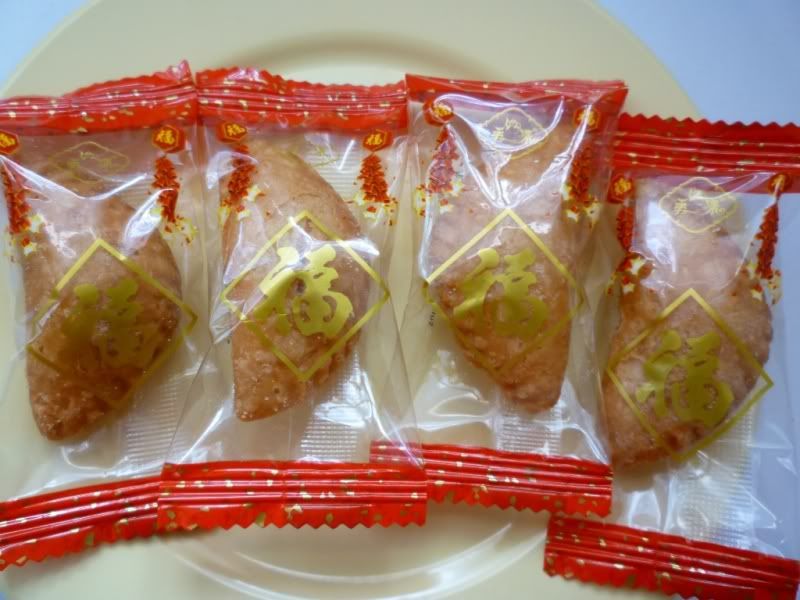
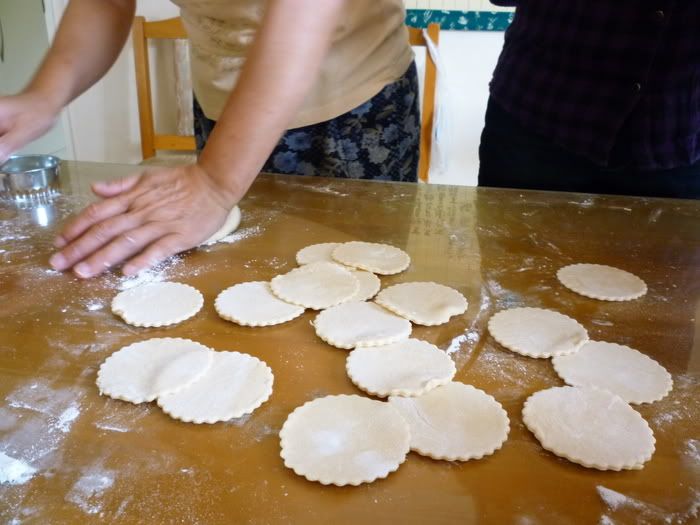
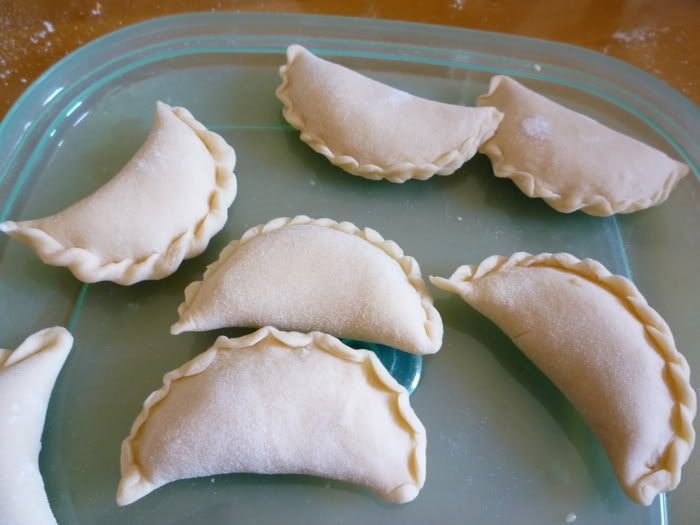
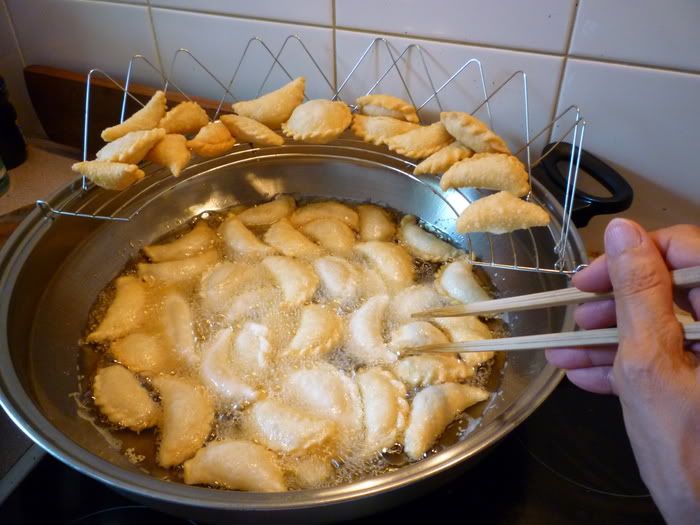
This time the lunch sharing was organized at Vera's house. Like the past lunch gatherings, other than each cooking member bringing a plate for lunch, the host would also give cooking demonstration on her specialty. To celebrate CNY, Vera had shown us the making of Kok Chai (油角仔) which was a "must have" snack during Chinese New Year in her home town in Hong Kong. This little crispy dumpling has peanut as fillings, it is also called peanuts puff. The deep fried golden colour and shape of the puff is similar to gold bullions and a symbol of wealth.

这是香港人过年必有的小吃,油角仔,因为包的是花生馅所以也叫花生角仔! 金黄金黄的油角,像铊铊黄金锭,很有新年好意头!

Crispy Dumplings (Kok Chai) 油角仔 - Featured in Group Recipes 11/02/2011

Commercial made mini Kok Chai - CNY gift set

Sharing the highlights of our lunch sharing and cooking demostration.


CRISPY DUMPLINGS(KOK CHAI)
Credit to Vera on recipe sharing

Ingredients:
Pastry
600g high ratio flour/Cake flour
(Chlorinated or high ratio flour, also known as Hong King flour, is special cake flour that is able to hold large amounts of liquid. This gives the cake produced a very soft crumb and a light, moist, fine texture.  They are also sweeter, have greater volume and a longer shelf life than cakes made with standard flour - extracted from Bake Info

If cake flour not available, you can also try to turn all purpose flour into cake flour using following method. I extracted this from Joy the baker. )
120 gm. margarine or butter or lard
120g cold water
2 large eggs

Filling:
300 gm. roasted peanuts – panfry skinned peanut, then remove the skins and chopped fine
80gm. roasted sesame
200 gm. caster sugar
20g shredded coconut
Oil for deep-frying(2 liters )

Method:
For pastry:
Using the food processor/bread maker, put margarine, flour and eggs and water into the machine until it becomes a dough. Rest for 30 minutes to allow dough fully absorb the oil, egg and water.

For filling:
Mix all the ingredients together.

To make the puffs pastry:
Use the pasta machine to roll pastry or hand roll using rolling pin into a thin sheet and use cookie cutter to cut into 1 3/4 - 2 inches rounds.

Put in 1/2 tsp of filling into the center of cut pastry and wrap up filling. Pinch edges neatly.

Heat up oil to 170 for deep-frying peanut puffs and fry till golden brown using medium heat. It takes about 8 minutes.Remove and leave them on cooling rack.


our Hong Kong born host - Vera
Let it completely cool before storing into containers.

Tips:
Don't knead the dough too long will make dumplings skin not crispy but chewy. Rest dough for 30 minutes to allow dough fully absorb the oil, egg and water. This will make crispy dough skin when deep fry.
油角仔

皮材料 :
600g低筋麵粉
120g菜油或豬油
120g水
二粒蛋

餡材料 : (份量隨個人喜愛)

80g芝麻 (用慢火炒香待涼)
300g有衣花生
20g椰絲
200g砂糖

做法 :
  1. 用白鑊炒有衣花生, 去衣, 待涼後捣碎,(有衣花生不易炒燶) 將花生,芝麻及糖拌勻,備用。
  2. 將麵粉篩入大碗中,加入菜油(猪油),拌勻 逐少加入水 ,搓和成耳垂般软的面团,用濕布蓋住休息半小时。
  3. 在台上灑上麵粉,取出一小份粉糰,用麵棍壓薄,用杯子印成小圓模取起小圓模,包入適量餡料,對摺成半月形後再用力壓實.  用手指拉出邊位再屈摺入, 每摺入一次就再拉出一次直至尾部為止,收口鎖邊 (Crimping)。
  4. 烧热油后約170 ℃,转中温,炸到金黄香脆(約八分鐘)。放涼架或用廚房紙瀝乾油份待涼即成.
貼士搓粉糰時不能太用力,搓至粉糰有筋性,油角便不鬆化;搓完更要靜置半小時,讓其完全吸收豬油、蛋汁及水,炸起來才鬆化。

Wednesday, February 9, 2011

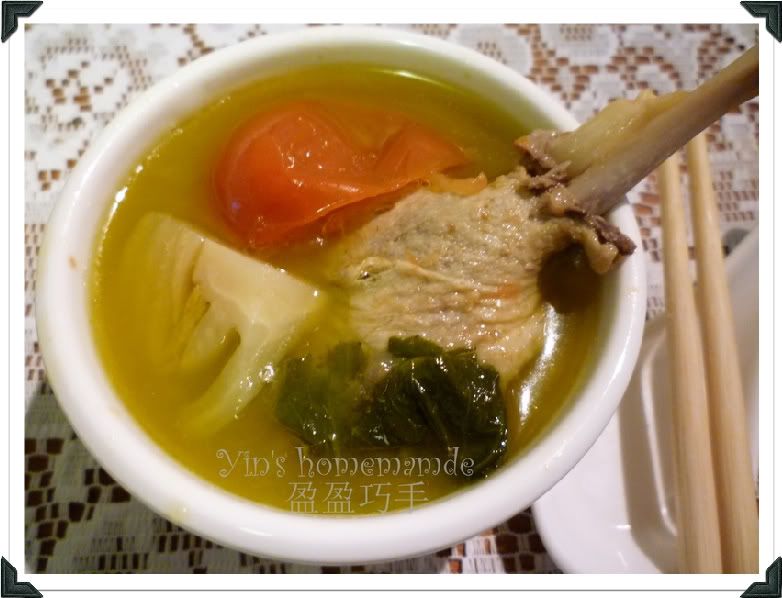
Salted Vegetables Duck Soup (Kiam Chai Ark) 咸菜鸭汤


Chinese New Year Dishes – Part 3(年菜之三)

This Nyonya dish is one of the must in traditional Teow Chew or Hokkien speaking families in the South East Asia during Chinese New Year celebration.

When Auntie Lan was staying with us, I requested her to teach me this grandma recipe. I bought quite a big duck (size 19) for the soup; we ended up using half of the duck only. I still have another half in my freezer that I'm planning to cook this coming Chap Goh Mei (15th day of Lunar New Year) 元宵。

Chinese believe salted mustard green is great in clearing away internal body heat. This soup with salty and sour taste is a great appetizer too. A bowl of the soup instantly opens up one's appetite especially in the hot summer weather.

Salted Vegetables Duck Soup (Kiam Chai Ark) 咸菜鸭汤

咸菜鸭汤是娘惹菜系中的名汤也是潮洲和闵南人新年过节的必备之汤。它的味道咸中带酸,有清热去火之功效,天气热没胃口,一碗下肚马上胃口大开!

Friday, February 4, 2011

Dongpo Pork Belly 东坡肉


Chinese New Year Dishes – Part 2 (年菜之二)


Nowadays with so many restaurants operating nearly 365 days even during Chinese New Year eve, it has become a trend that more and more families opt to eating out instead of having homemade reunion dinners like the old days. Many prefer having reunion dinner at restaurants not only to enjoy the lavish dinners but most importantly to save time and hassle in preparing big meals especially for large families.

Having said that, I still prefer the homely and warm feeling of cooking at home for all the family members. Knowing reunion dinner fell on a Wednesday and with Ming Ray's repeated request to invite his Lego playmates to come over, I had initiated an early reunion dinner last Sunday and invited 3 other families to join us. The task to prepare dinner for more than 16 people was a bit too daunting I thought. At the end I asked the invited families to each bring a plate (Kiwi slang for pot –luck). On my own I had prepared 3 dishes for this dinner.

As The Chinese New Year's Eve dinner was commonly very sumptuous and traditionally included chicken, duck, pork, prawns and fish, I decided to try out something more difficult with pork. I dug out my recipe books and finally picked this, Dongpo Pork Belly 东坡肉, which I adapted from another of my favourite Malaysia's Chinese best-seller cookbook by Chef Alan Kok.

Dongpo Pork Belly 东坡肉 - Featured in Group Recipes 04/02/2011


The dish was regarded as China Hang Zhou (杭州) signature dish, named after their famous scholar Dong Po 东坡 in the Song Dynasty.

This dish was very time consuming to prepare, requiring 3 hours of slow cooking. Due to an unexpected visitor during the process of cooking, I only managed to steam for 2 hours. Otherwise I believed the pork would have been even tastier and would melt in the mouth!

杭州的名菜, 由北宋名诗人苏东坡所创制而得名. 传说他在杭任太守期间组织民工治理西湖,功成后,把杭州人民送给他的贺礼猪肉与绍酒命人烧成红烧肉慰劳挖湖民工,后人遂称东坡肉. 它的特点是肉呈乳红色,汁浓味醇,酥而不碎,肥而不腻,香气四溢,入口不油不腻。

Tuesday, February 1, 2011

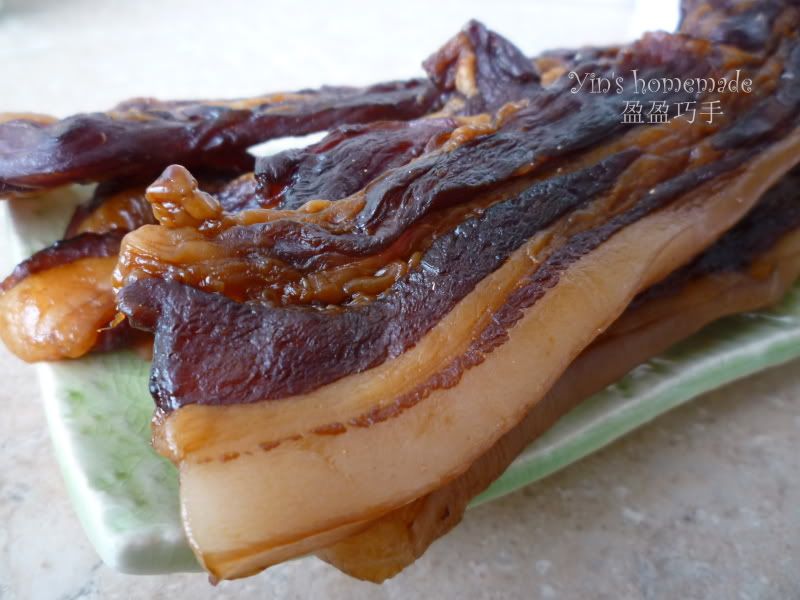
Homemade Chinese Preserved Pork (Lap Yuk) 自制腊肉


Chinese New Year Dishes – Part 1 (年菜之一, 腊味)


Another 4 more days, 3rd February 2011, we are going to celebrate Chinese Lunar New Year (CNY). However, until now I hardly feel any CNY atmosphere around here. I suppose living in a western country where CNY is not a public holiday the festival celebration atmosphere is much diluted. Not like back home, 1 or 2 months before CNY, one can begin to feel the CNY mood with CNY songs being played non-stop on radio, TV stations airing CNY related advertisements, shopping malls and shops decorated with glittery vibrant Chinese displays to embrace this upcoming spring festival.

 To create the CNY mood, I decided to work on some CNY dishes. Months ago, a friend of mine from Guangzhou gave me some of her homemade preserved bacon and shared the recipe of making them. To the Chinese, these are preserved delicacies sometimes used as major CNY dishes to celebrate the spring festival. Other than preserved pork (bacon), the other two major preserved delicacies are preserved ducks (腊鸭) and preserved Chinese sausages (腊肠)commonly use in fried rice. These preserved delicacies also make good traditional gifts during the festive seasons, especially during CNY. It always bugs me that commercially made preserved pork may contain industrial grade coloring and nitrate I decided to make my own preserved pork since the method mentioned is not complicated at all.

Chinese Preserved  Pork (Lap Yuk 腊肉) - Featured in Group Recipes 1/2/2011
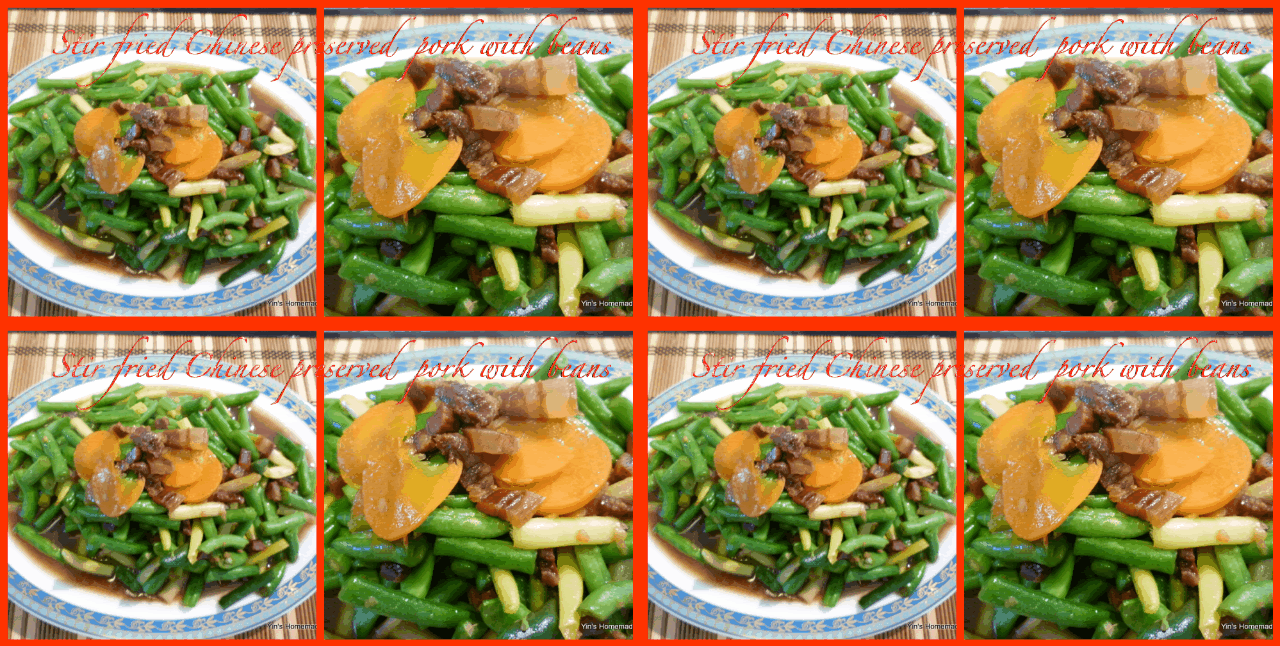
Stir fried dwarf beans with chinese preserved bacon

I used it to stir fry with my home grown dwarf beans and served in reunion dinner @ 30/01/2011

The original method involves piercing a hole in the pork belly strips and hang to dry in the sun. I didn't follow this step as this would have attracted flies! Yes, flies! Here in the summer, there are so many flies coming out of nowhere and they are especially easily attracted by seafood or food with strong flavor. I was surprised to see so many of them, as I thought in colder countries you tend to see less of them. The flies in Auckland seem to be much bigger than what we have in Malaysia! These flies are so irritating that we had to ask a Malaysian friend to bring over a mosquito zapper to kill them! Sometimes, when I fry fish, hubby would have to standby with zapper to zap them by my side! J

In addition to these preserved delicacies, Bak Kua (Pork Jerky) is also another great CNY gift among the Chinese in Malaysia and Singapore. You can check out this recipe which I covered before.

I would like to take this opportunity to wish all my Chinese readers a very
Happy and Prosperous Rabbit Year ahead!
Gong Xi Fa Cai!

在海外西方国家庆祝春节,节日气氛自然就淡,为了在佳节平添一份传统氛围和有着浓郁的节日气氛, 我自己动手制作一些腊肉刚好可在春节里食用,既可避免工业化学物质,吃得安心饱了口福,也添了过节的气氛。

在此我预先祝贺各位:
欢欢喜喜迎兔年,万事如意平安年,扬眉吐气顺心年,梦想成真发财年,事业辉煌成功年,岁岁有好,兔年行大运!


LinkWithin

Related Posts with Thumbnails