Showing posts with label steamed. Show all posts

Tuesday, January 1, 2013

Homemade Teo Chew Cai Kuih /Teo Chew Dumpling

This seem to be my last post for year 2012, with just second away to 2013. I would like to wish all of you :

 Happy New Year !
Welcome 2013


Penang Teo Chew Vegetarian Cai Kuih

P1100461


On the 15th December, we made a road trip to our hometown in Penang and later on our return journey extended our trip to Batu Kawan, a small town located along the route not far from Penang, to visit Auntie Lan’s sister. Auntie Lan’s brother-in-law recommended a local skilful Thai massage lady in Batu Kawan for therapeutic Thai massage to treat hubby’s chronic back pain and my repeated knee ache lately.

The massage was not the typical Thai massage for relaxation but rather like pressure point massage which hurt quite a bit. My body was said to have too much “wind” and the advice given was to reduce the consumption of ice and cold drinks.  Thankfully, other than the agonizing pain suffered on our bodies,  our tongue and stomach however got to savour one of the best homemade food.

Auntie Lan’s sister, Auntie Chun Li is another great cook. She is especially good at cooking vegetarian food. One of her specialties is the Teo Chew Cai Kuih  (Teo Chew dumpling). I told her that I wish to video tape her vegetarian Cai Kuih making and upload to Youtube. Both husband and wife were so happy to share the recipe and looked forward to be featured in Youtube.

There are 2 types of Teo Chew Cai kuih, traditional Cai Kuih which is using rice flour with thicker skin texture and chewy in taste. Another type which Auntie Chun Li shared here is using wheat starch. The pastry skin is translucent and thinner than the rice flour version. As this is Vegetarian Cai Kuih, Auntie Chun Li replaced Chinese Chives (韭菜) filling with Amaranth (苋菜) and using vegetarian meat in replacing dried shrimp and pork mince.

Sharing below the step by step video which I had uploaded in Youtube:


For recipe kindly click below link.

Saturday, September 8, 2012

Palm Sugar Steamed Cake 椰糖马来糕


 24th August 2012 marked the 8th day of the 7th month in the Lunar calendar and was my late mother in law’s 4 years passing anniversary.  To commemorate that, Auntie Lan reminded us to pay respect by making a lunch meal as prayer offering at home.
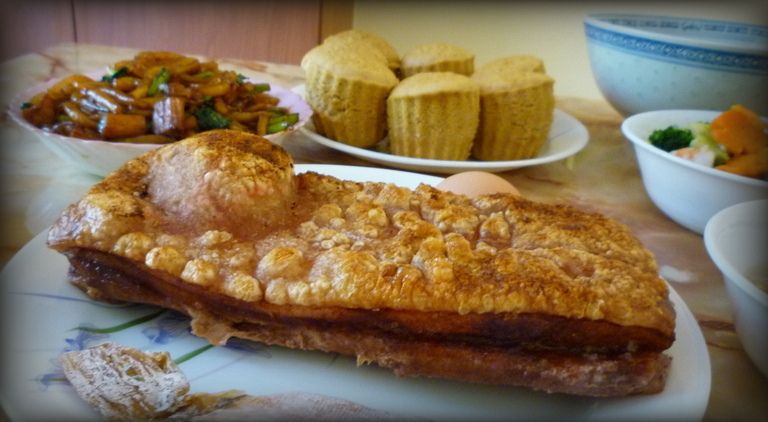
With a week-long Raya break at home not going anywhere, I offered to make cake and my signature dish Hong Kong Style Crispy Roasted Pork Belly as part of the offering.  As I remembered my late MIL loved eating roasted pork.
HK style Crispy Roasted Pork Belly
The following steamed cake is a type of Malay Kuih/cake which is similar to Chinese “Huat Kuih” (发糕) commonly served in Chinese prayer offering. 

Palm Sugar Steamed Cake 椰糖马来糕

Palm sugar, also called Gula Melaka in Malaysia is a type of sugar made from palm tree. In Malaysia, this dark chocolate colored sugar is usually sold in a solid log form and the Malay loves to use it as sweetener to their dessert.


Monday, August 6, 2012

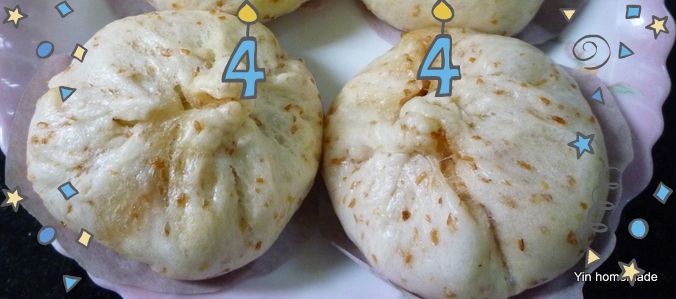
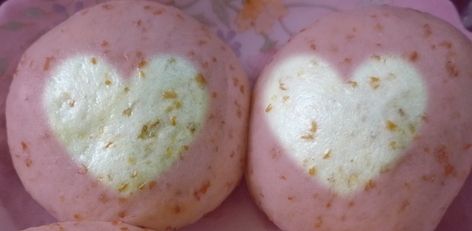
Wholemeal Pau 麦片包子

Healthy Pau   

I’ve been trying hard to keep my post up to date. However my current work schedule seems hard for me to keep up the pace. This was another month old birthday post, as this special healthy steamed bun/Pau was meant to be hubby’s birthday “cake”.


Happy belated birthday dear!

Hubby is never a pastry and sweet tooth guy, hence when I mentioned making a cake for him to celebrate his birthday instantly he declined and asking to have Supreme big Pau (steamed Bun) instead. Well, the ancient Chinese steamed peach shaped Bun 壽桃寿包 did play similar role as the birthday cake today.
I had shared the steamed buns with shredded chicken breast, egg and yambean fillings and Kaya filling in my old posts. This improved version replaced 1/5 of the Pau flour with wholemeal flour. This time besides the chicken fillings, I also tried out my own homemade red bean paste. I will share the making of red bean paste in a later post.
Wholemeal Pau 麦片包子

Frankly, with the wholemeal grain, the texture of the Pau was not as refined and soft as plain Pau, kind of similar texture to expect when you eat white bread compared to wheat grain bread. Nowadays, with more and more people going for healthy diet, eating healthy and eating right has become the key factor in food preparing, overshadowing the taste of the food. Of course, it’s still best to have both!

In my opinion, all who love cooking love to be able to serve healthy and delicious food to our loved ones right? J

Sunday, February 19, 2012

Teochew Style Steam Fish 潮州式蒸鱼

年年有余(鱼) To be abundant, to be plentiful year after year
I know this post comes a bit late since Chinese New year was over for 2 weeks now, better late than never I guess. J
It is customary for Chinese to have a feast of symbolic dishes to welcome the Lunar New Year. There are a few “must serve” auspicious-sounding dishes during the Chinese New Year Eve "Family Reunion Dinner". Other than the usual chicken, duck and pork, fish is one of them that plays major role in festive celebrations.
Fish in Mandarin 鱼 is pronounced as “Yu".  A homonym of fish, is the word abundance/surplus (余). Hence it is a Chinese ritual to serve fish during the reunion dinner to signify a wish for abundance and plentiful harvest year after year年年有余 (nian nian you yu). In addition, the fish is to be served whole, with head and tail attached, symbolizing a good beginning and ending for the coming year.
For this dragon New Year, it was our first CNY since we got back from Auckland. We were delighted to have a bigger group of 30 family members in celebrating reunion dinner. We joined my dad along with all my brothers and sister and her in-law Lee’s families’ to dine at Red Rock Hotel, Tian Tian Restaurant.

The following were some of the signature New Year dishes we had from our 8 course sumptuous reunion dinner.
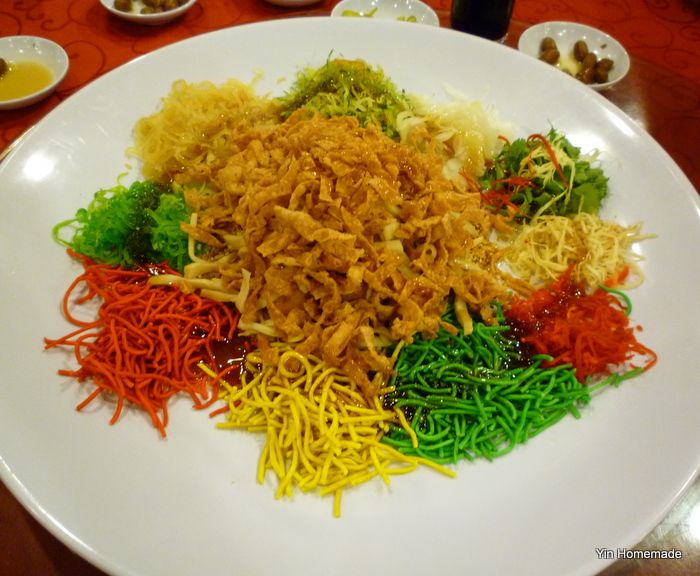
Prosperity salmon Yee Sang
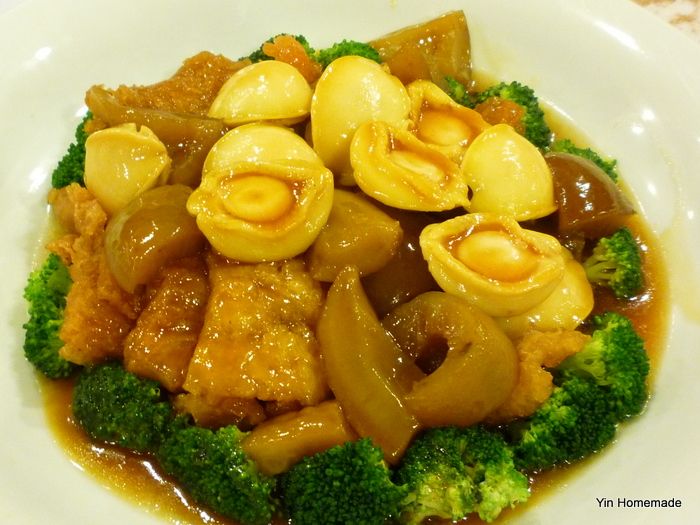
Braised abalone, sea cucumber, mushroom and broccoli
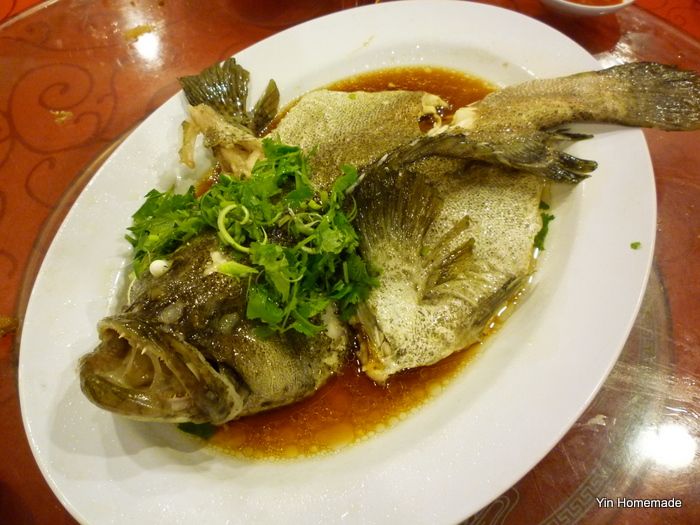
Last but not least the FISH!
Soya sauce steamed grouper
For the 2nd day of CNY, my 2nd sister-in-law suggested to have simple homemade family lunch at home.  In view of the fact that during the first few days of Chinese New Year, dining out was very difficult because many restaurants were close for the New Year break, I gladly supported her idea and contributed my help in the kitchen.
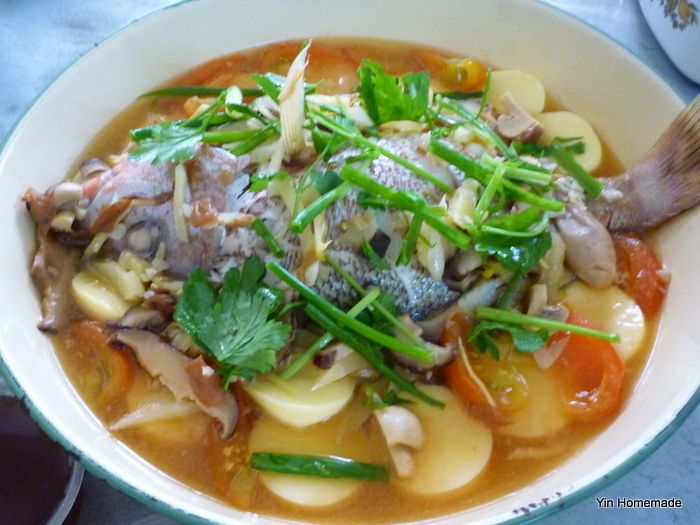
The following was one of the dishes that I helped my sister-in-law to prepare. Steamed fish in Teochew Style, a favourite steam menu I often cook at home.
Teochew Style Steam Fish 潮州式蒸鱼

Friday, August 26, 2011

BBQ Buns (Cha Siu Pau )叉燒包

I suppose those who love dim sum would agree Cha Siu Pau is one of the signature buns served among dim sum dishes. It is also a must order item whenever a family with kids visits a dim sum restaurant.
On 8th August, in commemoration of my late mother-in-law 3 years passing anniversary, we had prepared a hefty lunch featuring her favourite dishes.  I made these buns and Auntie Lan helped to make fried noodles, and Kiam Chai Boey (Stew Salted vegetables). All these recipes are available in my blog, just click on them.
Initially, I was thinking of making own Cha Siu but when I went marketing that morning, the main ingredient, pork loin, had been sold out.  Since in Malaysia ready-cooked Cha Siu was easily available, I decided to go for an easy way out instead. J However, if you wish to attempt making your own Cha Siu (BBQ pork), the simple version recipe is available here.

If you happen to have roast pork for dinner, you can use the left over for its filling too.

Sunday, July 3, 2011

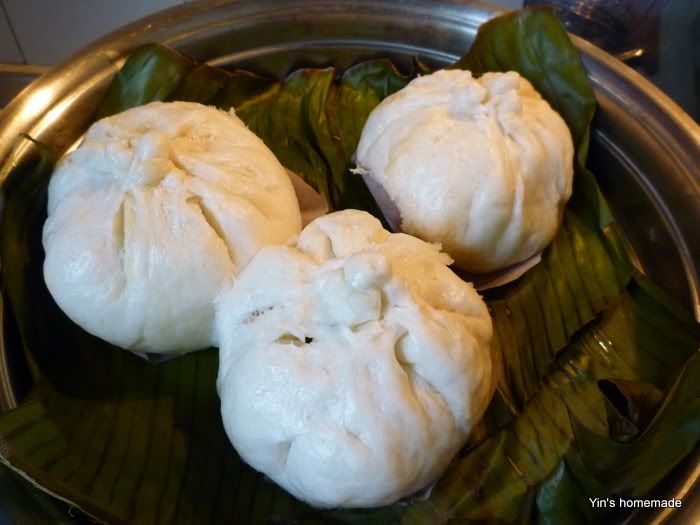
Steamed Buns (Baozi/Pau) 包子

Supreme big Baozi/Pau, anyone? 大包? 
Bread is the main staple food to Western Cuisine as in Baozi/Pau (steamed buns) is to Chinese cuisine.  Baozi is especially popular in the Chinese breakfast serving.  Baozi making shares similar process to bread making which requires  yeast dough, kneading and proofing with the only difference in its cooking method - steam instead of bake. Hence, baozi can also be regarded as stuffed steamed bread.
There are various types of baozi ranging from plain buns to stuffed baozi with various fillings. What filling can be used in baozi?  The classic fillings are meat (cha siu /BBQ pork/beef/chicken) or sweet fillings like red beans, lotus paste, kaya (coconut egg jam), peanut butter or even vegetables. I would say the list is too exhaustive to name and only imagination is the limit.
Having mastered the basic skill in Western bread making, I reckoned it was time to take up new challenges in learning up Chinese bread making J  I had two fun experience with my cooking members back in Auckland in making Shanghai pan fried baozi(上海生煎包). However, at that time I did not have the chance in making the yeast dough from scratch. The yeast dough was prepared and proof in advance and we were invited to go over to help in wrapping and pan fried.
Last Sunday, I decided to try out the steamed buns yeast dough recipe from Agnes Chang’s “Delightful Snacks and Dim Sum” cook book. With this yeast dough I had successfully made 4 big supreme big pao with shredded chicken breast, egg and yambean fillings and 6 small Kaya bao using my homemade kaya filling.    
Steamed Buns (Baozi/Pau) 包子
I was delighted that the texture of the steamed buns was very soft and springy. However, hubby commented that the taste of the meat fillings could have been improved with longer marinating time overnight in the fridge to further tenderize the chicken breast and the seasoning more thoroughly absorbed.   

Thursday, December 9, 2010

Kuih Talam (Coconut Tray Cake) 娘惹香草糕 - Featured in Group Recipes


Microwave Kuih Talam?

This is another classic Nyonya dessert. Kuih is a common local Malaysian word for all Nyonya and Malay desserts. This popular kuih not only is one of Malaysian all-time breakfast favorite but also serves as great party snacks. This steamed coconut flavor rich dessert comes with top white layer made from coconut milk and rice flour and the bottom green layer is made from rice and mung bean flour with natural green coloring extract from pandan leaves a.k.a screw pine leaves.

The instruction in the original recipe suggested cooking time of 1 hour, requiring slow simmering or double boiling in the kuih thickening process before steaming. I reckoned this traditional way of thickening process was quite time consuming. It struck my mind whether I could adopt the same microwave method that I applied in coconut egg jam, Kaya making to speed up the process.

I gave it a try with the microwave method on my first tray. My first attempt was not as impressive as I was trying to find out the right time required to microwave-cook the batter to the right concentration before placing it into steaming tray for steaming. I over heated the green layer resulting in the green layer batter was over thickened and lumpy.

However, since I had another half tin of coconut cream to experiment further, I proceeded with my second attempt. This time I knew that I shouldn't heat the green batter for more than 4 minutes in total and each session no more than 1 minute. It should be stirred constantly after every time it is taken out from the microwave. As for the white coconut cream batter, it only took about 2 minutes to thicken. I repeat the heating process more often with last minute at 30 seconds interval. The result, as can be seen from the photo, is a nicer smoother batter for both the green and white layers. J

I didn't expect my little picky boy appreciate this classic kuih so much.


Friday, November 19, 2010

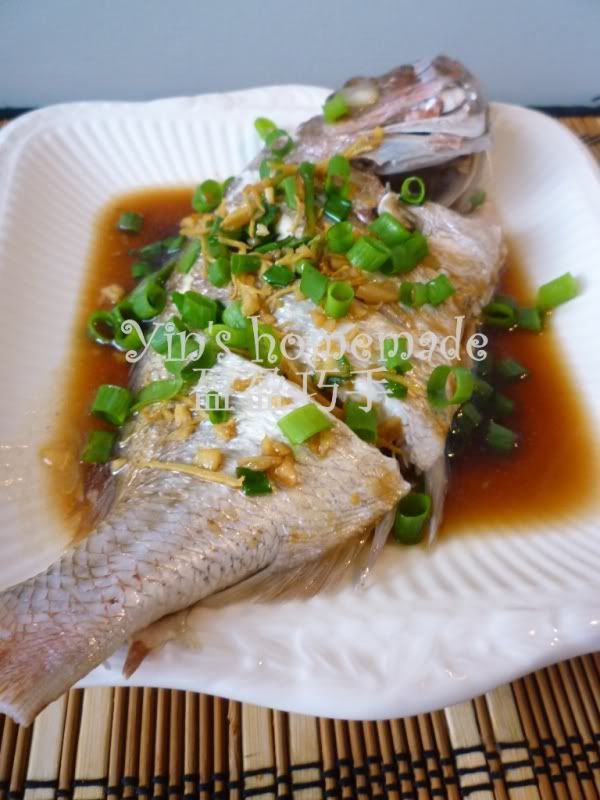
Steamed Snapper with Ginger and Spring Onions姜葱蒸鲷鱼- Featured in Group Recipes


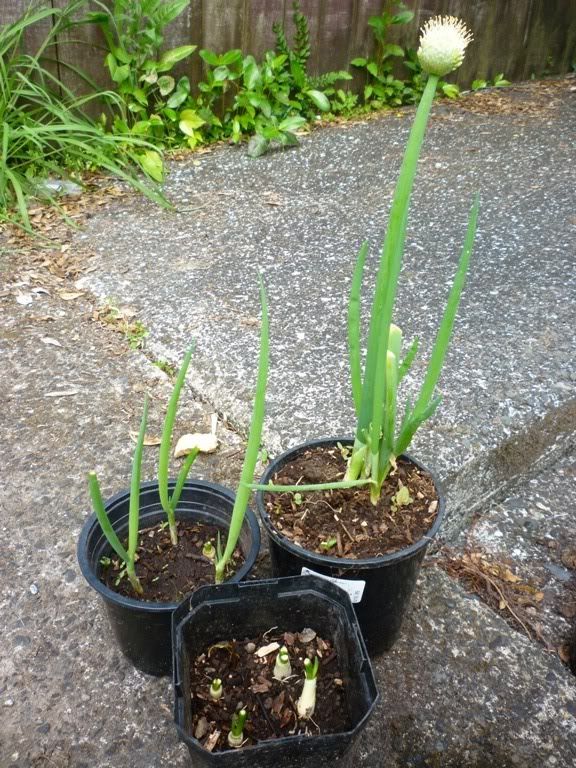
Garden to table – Spring Onions
Weather getting warmer by the day, meaning fishing season has started. In other words, more keen anglers' are heading out to fish. Fringe benefit of knowing keen anglers means more chances to enjoy free and fresh supplies of seafood.

Thanks to my dear friend Ellen, we got to enjoy fresh snapper for dinner tonight. The fish tasted so fresh and delicious even though I only used simple ingredients like soy sauce, ginger and fresh spring onion from my garden J

In my opinion, the best way of cooking fresh fish is just simply steaming it. This simple and healthy fish recipe takes less than 15 minutes to cook.

Steamed Snapper with Ginger and Spring Onions姜葱蒸鲷鱼
繼續閱讀中英对照食谱

Thursday, October 28, 2010

Pork Belly with Dong Cai 冬菜扣肉

Once a while, I will attempt to prepare some tedious and time consuming dish and this is one of them. Hubby has been asking for it for some time, so being the main Chef in the house, when you get the order you need to serve it right?

DongCai 冬菜 in Chinese literally means winter vegetable, this is Chinese traditional pickles, made of preserved dried cabbage or mustard greens. There are two famous types in China, one is Sichuan preserved vegetable another is Tianjin preserved vegetable. This preserved veggie commonly use in soup or stir-fry with meat. For this recipe, I'm using Tianjin five spices preserved vegetable

I understand with current trend of healthy eating this recipe might be a big X to some especially to weight watchers but on contrary this dish is one of our family favorite. The man in my family, his motto of eating is whatever delicious and meaty J

I adapted this recipe from one of my favourite Malaysia's Chinese best-seller cookbook by Chef Alan Kok Ho Ho Jiak! Hawkers' Fair .

Pork Belly with Dong Cai 冬菜扣肉
Pork belly that melt in your mouth

Saturday, October 16, 2010

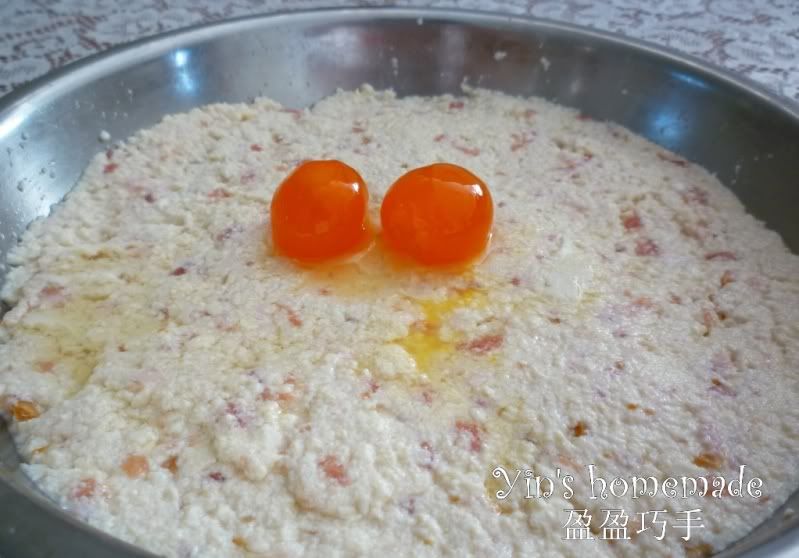
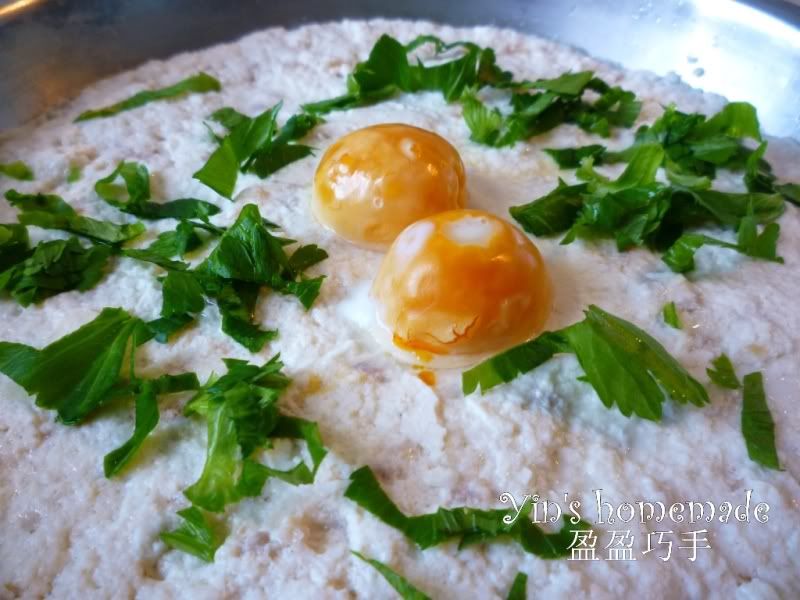
STEAMED TOFU WITH SALTED EGGS 老少平安


I like the Chinese name given for this dish 老少平安 , the name literally in English means "Elderly and young peace". I was introduced to this dish when I mentioned to one of my computing classmate Penny from Guangzhou what to do with the surplus egg whites that I have in fridge after making Portuguese egg tarts. She further explained the reason of naming "Elderly and young peace" is because the soft and smooth texture of the dish with main ingredients of tofu, fish paste and egg whites is perfect for young and elderly without worrying about missing teeth and choking problem with fish bones, therefore everyone is safe to eat. :-)

Frankly, this traditional home-style Cantonese cuisine and also regards as "lazy people food" recipe is similarly to steam eggs with variation of adding tofu and fish paste. Of course, there are other variations some even mixed with shrimp and mushrooms. My version, I didn't have any fish paste so I replaced with pork mince and added my homemade salted eggs as topping.

Steamed Tofu with Salted eggs
Homemade Salted Eggs
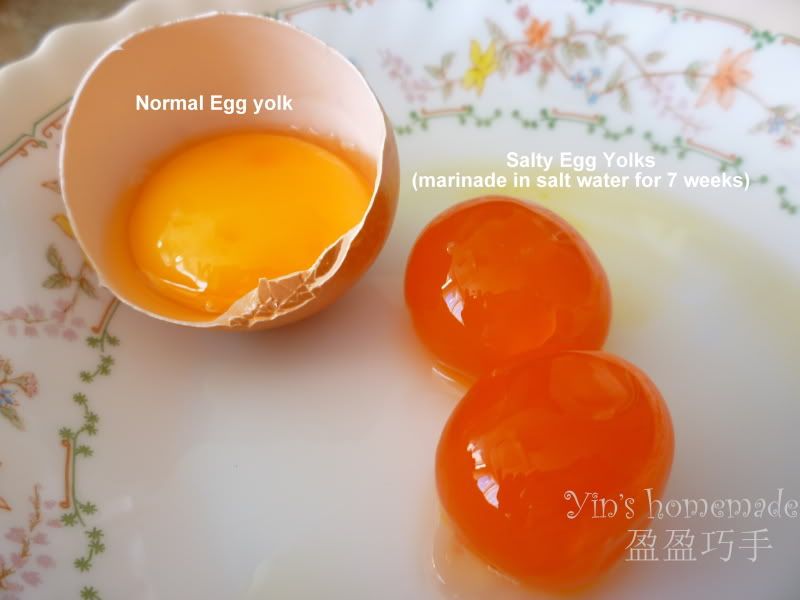
Salted egg yolks vs normal egg yolk

LinkWithin

Related Posts with Thumbnails