Showing posts with label Nyonya Cuisine. Show all posts

Saturday, January 10, 2015

Nyonya Fried Fish with Chili Lime Sauce 娘惹酸柑辣椒煎鱼


Are you bored with just plain deep fried fish recipe? Looking for some extra flavour to spice up the dish?

Sharing below is a simple Nyonya fried fish with mixture of lime juice ( I used Calamansi juice), bird’s eyes chili and seasoning sauce to zest up the flavour.

chililimefishcloseup

After cleaning the fish, do make sure to pat dry the fish with paper towel to avoid water splashes in hot oil.

Once pat dry, marinated the fish with a bit of salt, pepper and dash some corn flour to coat the fish before deep frying it in a hot oiled  wok. Deep fry the fish until crispy texture on the outside but still moist inside. Please refer to this post for ways of deep frying fish.

The Calamansi I used here were plucked freshly from my own garden. The same applied to the bird’s eyes chilies harvested from my neighbor's garden.

You can refer to my green hopes to find out some of the plants and vegetables that I had successfully planted and grew in my tropical garden.

calamansi

However, it was sad to note since my return Malaysia, I did not have any luck in the growing of bird’s eyes chili in my Malaysian garden. The glorious story of my green fingers in the planting of bird’s eyes chili from frozen seeds in Auckland was long gone.Sad smile

If you can’t get Calamansi, which I reckon is not easily available everywhere, you can use lime or lemon to get that sourness required in the sauce.

Instead of pouring the sauce on the fish, you can also make it as a dipping sauce.  This will favour those who can’t take spicy dish, where they still get to enjoy the crispy fried fish.


RECIPE

P1000202


Ingredients:

Fish – 2 medium size whole fish (the smaller the fish easier to deep frying in getting crispy texture)

Dash of salt, pepper and corn flour to marinate

Sauce

Juice from 4-5 calamansi lime

(to your liking on sourness, reduce quantity if using lime or lemon which bigger size)


4-5 bird’s eye chilli, sliced thinly


1 tsp. of sugar
1 tsp. dark soya sauce

1 tbsp. light soya sauce

( This 3 seasoning can be replaced by Indonesian sweet soy sauce – Kicap Manis ABC being used then no sugar and dark soya needed)


1 tbsp. oyster sauce

  1. Deep fried fish in hot oil till crispy and dish up and set aside on a plate discard any excess oil from frying pan with paper towel.
  2. Heat up wok in low heat, add in seasoning sauce and sugar, let it dissolve then add in bird’s eye chilli stir and off heat.
  3. Add in calamansi lime juice and mix well, and taste. Adjust the seasoning accordingly.
  4. Pour the sauce over the deep fried fish and serve hot.

娘惹酸柑辣椒鱼

主料:
鱼 - 2个中等大小的全鱼(较小的鱼更易油煎至口感松脆)
盐,胡椒粉,玉米/太白粉腌

酱料
酸柑汁4-5酸柑粒(根据自己对酸味的喜好)
4-5辣椒仔,切成薄片
适量,糖,老抽,生抽, 蚝油

  1. 在热油中煎鱼,直到香脆盛起,用纸巾吸收任何多余的油后备用。
  2. 用小火烧热锅,加入调味酱和糖,让它溶解,然后加入辣椒仔炒匀。
  3. 熄火加入柑酸柑汁拌匀,口味测试,相应地调整调料。
  4. 倒入辣椒仔酸柑酱在煎鱼上,趁热食用。
Sunday, February 9, 2014

Scramble eggs with Shark’s fins and Crab meat ( 鱼翅炒)

First of all I would like to wish all my Chinese readers a very happy Chinese New Year!
May you be blessed, in this horse year, with good health, galloping like a champion horse to a great  height of success!
30294-Vector-Horse-2014-Chinse-logo
This year CNY day-1 lunch, my second Sister-in-law has suggested to try out this simple scramble eggs with the luxurious filling of shark’s fins and crab meat as it seemed to be a simple and fast egg dish which was kids friendly!

This Shark’s fin scramble eggs is one of the popular Nyonya cuisine dishes served during Chinese New Year reunion dinner. It is also commonly served in Chinese Wedding banquets where it usually forms part of the hot & cold combination platter served as starter with the name of Four Season.
I happen to bring back a copy of Food Magazine “ Yum Yum” featuring mostly Chinese New Year dishes and we found this recipe in there. On the Chinese New Year Eve night, SIL has briefly glanced thru it but didn’t really remember the all the steps.

The next day, CNY day-1, after finishing our ritual prayer at temple, we went back to dad’s house to prepare lunch. It was too bad that, I forgot to bring the recipe book. Hence, she just had to improvise whatever she couldn’t recall to prepare the dish. In the end, our version turned out to be  more like scramble eggs with veggie instead because we added a bit too much of onion, spring onion and cabbage we could hardly see the shark’s fins in it.

Nevertheless, it still tasted great! Smile

sharkfin_char2
This dish can go with white rice or be wrapped with lettuce or placed in this “top hats” or Nyonya kuih pie tee.

For the recipe of how to make this crispy Pie Tee, do click on the link to one of my favorite food blogger site - Rasa Malaysia.
sharkfinchar_tapee2
Our home cooked CNY lunch main dishes, scramble eggs with shark’s fins, braised sea cucumber, mushroom and pork trotter.
cnyday1lunch

Monday, March 11, 2013

Turmeric Fried Fish 黄姜煎鱼


Crispy Nyonya fried fish
This is one of the common deep-fried fish dishes that you can easily find in economic rice (mixed rice) stalls or small eatery shops in Malaysia, Thailand and Singapore. With its crispy and crunchy texture, it is one of the kids’ favourite pick too!
As you can tell from its name, the main spice used in this recipe is turmeric powder which is also one of the most important spices used in curry. This spice is easily available in any Asian grocery shops. Back in Auckland, I could conveniently find it in big chain supermarkets like Pak'nSave, New World, and Countdown at their spices counters.

This recipe may seem simple with only a few ingredients and steps to follow, however it may not be as easy to master as you think, especially on the deep frying part!
The key to fry crispy and crunchy fish is to have the fish fried in HOT oil. If the oil is not hot enough, you may experience:
1.       Fish sticking to the pan/wok problem ruining the presentation
2.       Too much oil absorbed by the fish resulting in soggy, greasy fish.
So, how can we avoid this? How to test whether the oil is hot enough? The following steps are what I usually do to test the temperature of the oil. I use a chop stick or skewer and dip into the centre of the wok. If little bubbles are visible, as shown in the following photo, the oil is hot enough and ready for deep frying. 

Hot oil
 Another phobia that keep cooking novice from attempting to deep fry is the fear of being splashed by hot oil. So, to prevent this from happening, I do the following:
1. Keep the fish DRY – pat dry the fish with paper towel after cleaning and scaling
2. Coat fish with a layer of thin corn flour/flour to further absorb the moist and keep the fish skin in place
3. Slowly slip the fish into the wok from the side, no dropping from high heights and keep a distance away from the stove once the fish is in the wok.
4.  Face out the pan/wok cover to act as shield from possible oil splash once fish is added into the wok/pan.
 
Above are some of the methods I used. However if you are health conscious and not in favour of deep frying but still wish to try the taste of this Nyonya Turmeric fish, you can go for oven grill instead but you may not be able to taste the same crispy texture as in the case of deep frying.
Turmeric Fried Fish 黄姜煎鱼

Friday, August 31, 2012

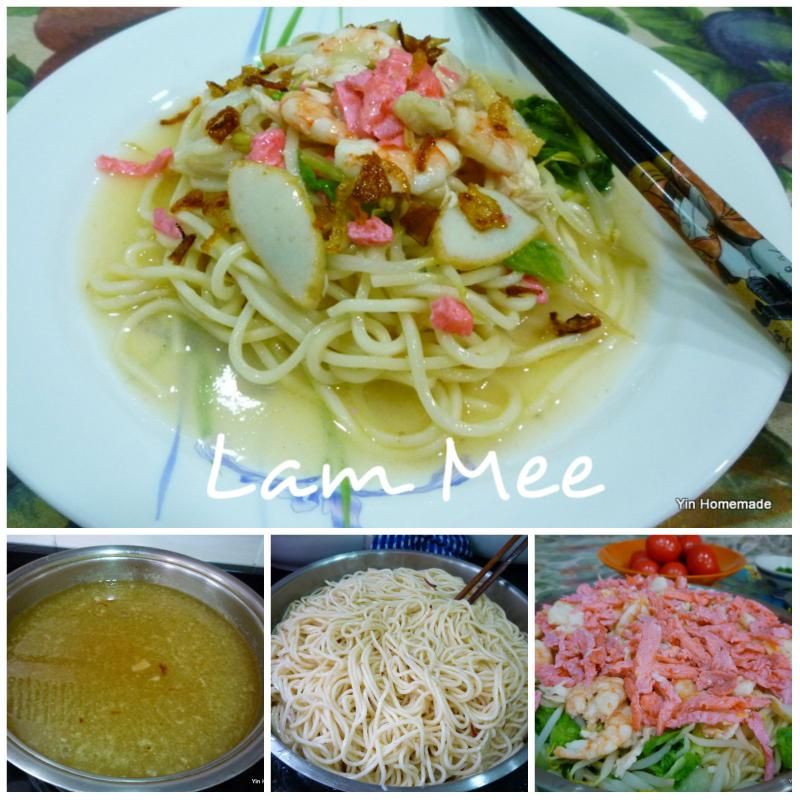
Lam Mee/Birthday Noodles 淋面


Nyonya Lam Mee

Traditionally for the older generations in Penang, Lam Mee is a must serve during birthday celebration to symbolize longevity. Therefore last July when we had a small birthday party for Ming Ray, his favourite Auntie Lan insisted to make Lam Mee as his main lunch meal.    

The specialty of this dish lies in the gravy, which is made of clear soup by boiling pork ribs/chicken bones for hours which gives strong flavour of the meat taste. It is then served with yellow noodle topped with shrimps, shredded meat, pink colored shredded omelets, shallot crisps and coriander leaves. Different from the variation served in Kuala Lumpur, Penang Lam mee is not as starchy and not as dark colored compared to KL Lam Mee.  


For a true authentic way of eating Lam Mee is best eatenwith a little bit of Sambal Belacan.  However since our host and his 2 little guests couldn’t take spicy food, we did not make effort to prepare it. 

Sunday, April 29, 2012

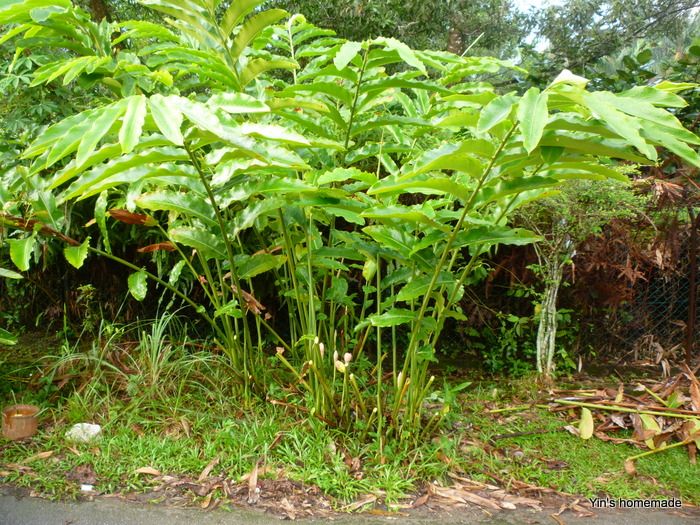
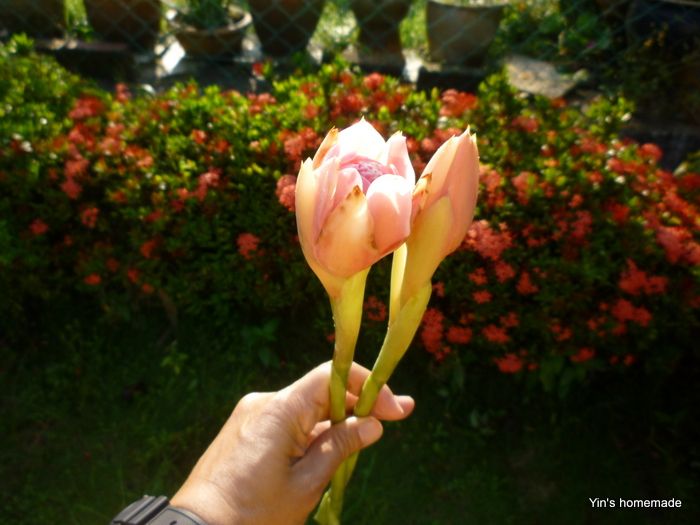
Bunga Kantan (Torch Ginger Flower Bud) 姜花

From garden to table

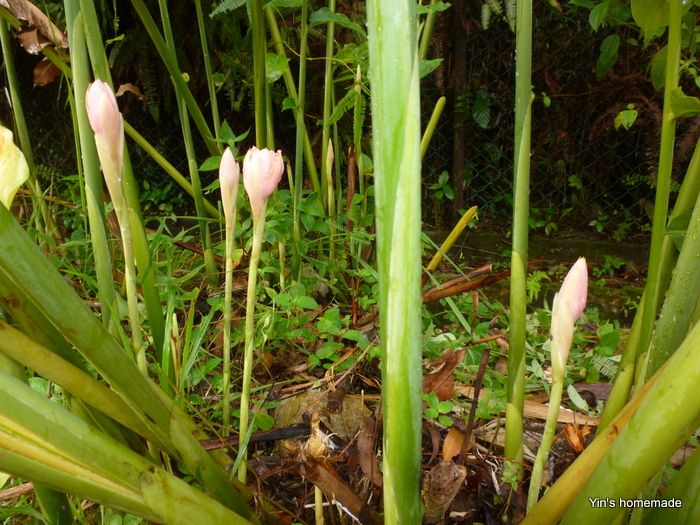
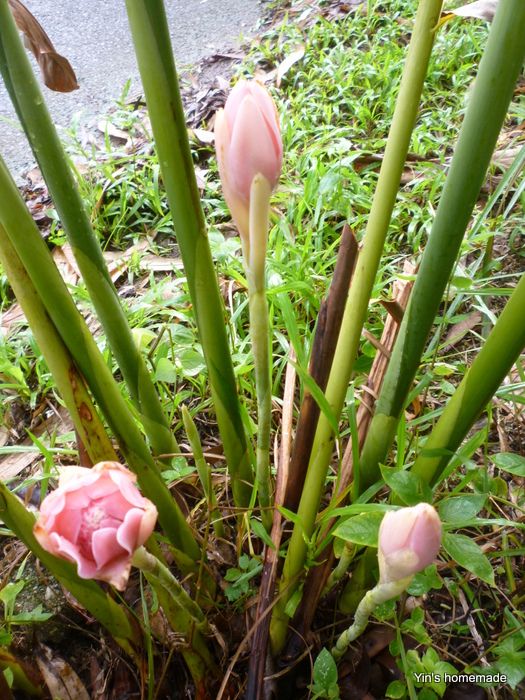
Etlingera Elatior, the scientific name for TorchGinger Flower, or Bunga Kantan in Malay and 姜花 in Chinese, is a type of tropical flower commonly found in South East Asia. Its pink flower bud is particularly important to be used as a spice ingredient in Malay and Nyonya cuisine, with its distinctive, aromatic fragrance to zest up curry and seafood stews i.e. Tomyam and Laksa.
Over here, we also call it Laksa flower (Bunga Laksa in Malay), since it is used in the famous Penang Nyonya Assam Laksa. In addition to Laksa, it is also widely used in Malay, Nyonya and Thai fruit salad i.e. Rojak or Kerabu.

We had this flower planted opposite our house by my late mother-in-law a year before she passed away in 2008. It took more than a year to flower. The leave stalks and flower stalks grow out from an underground stem and the flower plant can grow over 4 meters in height. It requires larger space and is not suitable to be planted in a pot. I didn’t place much attention on it and just let it grew wildly. When we were about to leave for NZ in mid 2009, we got to see it just started to flower.
Taken in year 2009
First flowr
By the time we came back from NZ, we were surprised to see it still grew healthily and flowered so well.
About 4 years old trees - April 2011
Flowers grew wildly
Harvest to use
When I was in Auckland, instead of fresh buds we were lucky enough to be able to find frozen ginger flower buds from certain Asian grocery shops, as I knew many people could hardly find it in European countries and the US.

To use Bunga Kantan, we only take its bud and chuck the stalk.
TorchGinger Flower, or Bunga Kantan
Few ways in using the buds in cooking:
First slice bud into half or quarter and place into curry/gulai/tomyam
 to cook to flavour the soup.

Flower bud to add in curry, gulai or tomyam soup

or you can also opt to finely shred the whole bud and use for garnishing or adding into Kerabu or fruit salad

Tuesday, January 31, 2012

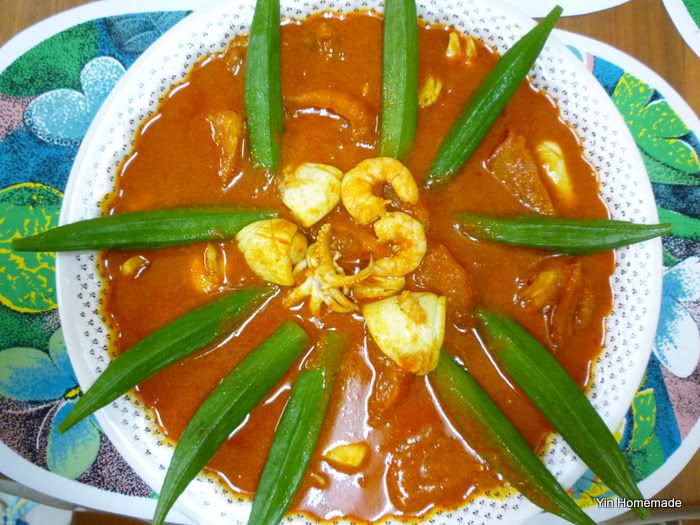
Assam Sambal Seafood Curry 亚参三巴海鲜咖哩


Wanna a bowl of Nyonya curry to spice you up?

As promised, here is the recipe that will spice you up using the Sambal Belacan Chili paste prepared in my previous post.
The following version of seafood curry is more like the Nyonya style where Assam was used instead of coconut milk. Assam in English means tamarind. With tamarind as one of the ingredients, you can expect this is a sour and spicy curry. J
Once you have this ready homemade sambal chili paste stocked up in your pantry, whenever you yearn for curry, you can have it in less than 30 minutes and without the concern of unhealthy preservative in the food.
This round of seafood curry, we used squids and prawns.  Basically you can use any seafood to your liking. For fish you can check out my previous curry recipe Assam Stingray which also used the same homemade chili paste.
Let’s cook healthily and eat healthily!

Wednesday, December 22, 2010

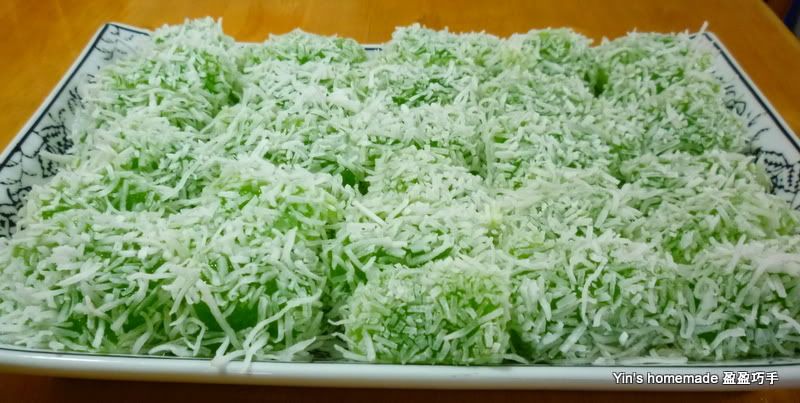
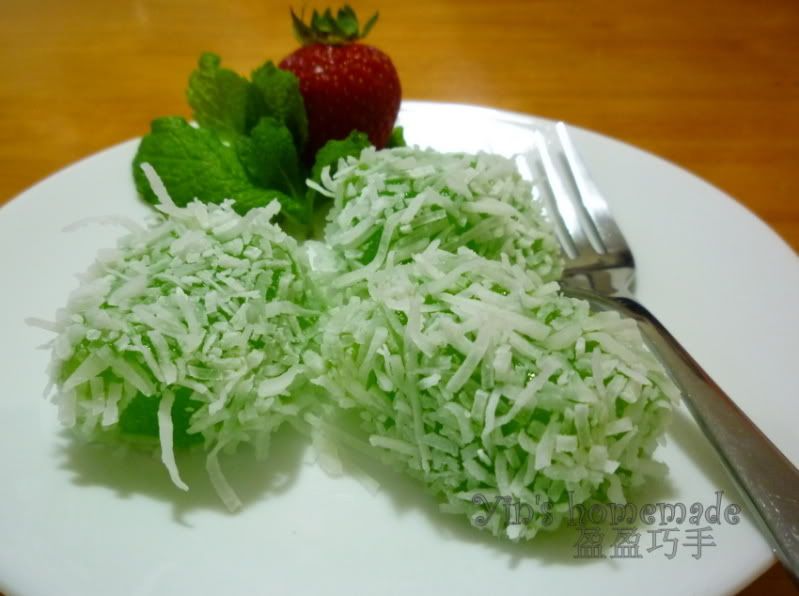
Kuih Sago( Steamed Tapioca Pearls Cakes) 椰丝西米糕 - Featured in Group Recipes


Wanna a slice of gluten free sweet and chewy Nyonya kuih?

This is another blissfully easy and delicious Nyonya kuih recipe, Kuih Sago. Sago, also known as Tapioca Pearls, is made of tapioca. Tapioca Pearls is one of the common South East Asian dessert ingredients, widely used in Malay, Nyonya and Thai desserts.

This recipe was verbally taught by a Malaysian cashier whom I met at my regular Asian grocery store. It happened that one day she showed me the kuih which she made for her colleague as birthday treat and asked me what the proper name was for the kuih in Malaysia which she couldn't recall. I was of no help to her as I had no idea what the name for that kuih was. But since she said the main ingredient was sago, I guessed it must be Kuih Sago. She mentioned that the kuih was super easy to make, just "mix and steam", so it prompted me to give it a trial.

I made this last Saturday and brought over as dessert to our regular Penang families dinner gathering. I used green Pandan flavor sago. Alternatively you can use white sago added with some coloring.


These snowballs like of luscious gluten free kuih , can be a unique Christmas dessert recipe too.
Kuih Sago 椰丝西米糕 - Featured in Group Recipes 21/12/2010

Saturday, December 11, 2010

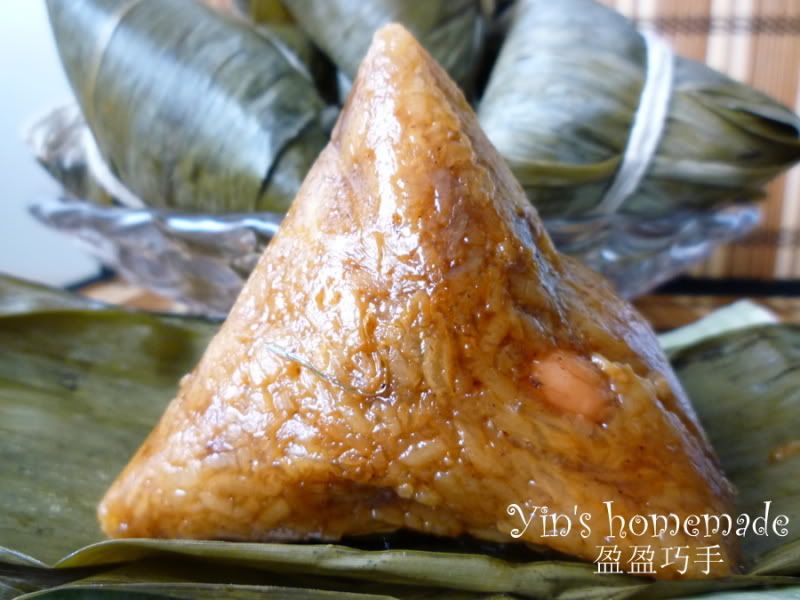
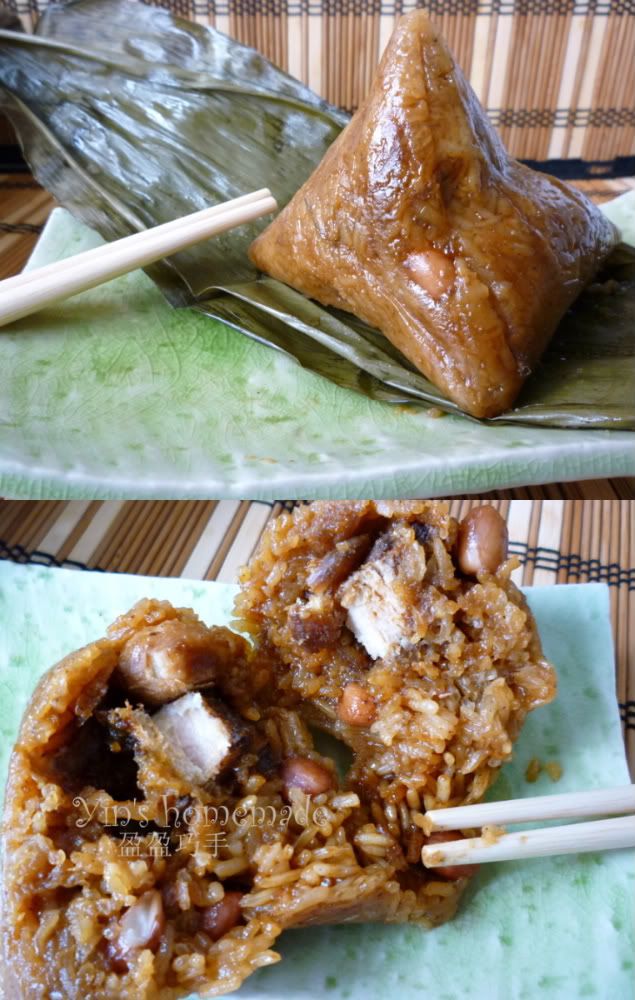
Bak Chang (Savoury Rice Dumpling) 咸肉粽子 - Featured in Group Recipes

I know now is not the right time to introduce glutinous rice dumpling, as Dumpling festival
(端午節) which traditionally is celebrated in June (fifth day of the fifth month on the Chinese lunar calendar) was long overdue. However, since we migrated to NZ we didn't have a chance to eat nice Malaysian made Bak Chang (in Hokkien) a.k.a. zhong Zhi粽子.

Even though we could get sticky rice dumplings here in Asian shops but they were mostly Mainland China flavoured, the taste was very much different from the Malaysian style savoury rice dumplings. Thanks to my Taiwanese classmate Lily and Linda, I got to taste Taiwanese flavour bak chang too. Nevertheless, we still missed Penang Nyonya bak chang, especially those made by Ray's auntie. Hubby loves her bak chang very much, he can wallop 4 sticky rice dumplings in one go!

With Chef Ah Lan around, of course Bak Chang was one of the long overdue order placed with herJ. Even though this was not rice dumplings time, we still managed to get the right ingredients to make them. I suppose this sticky rice dumpling has been blended in our daily meal and no longer served as seasonal meal.

Bak Chang (Savoury Rice Dumpling) 咸肉粽子- Featured for Dec 10th
To many, the making of Bak Chang is rated at difficult level, especially on the wrapping and tying parts. The wrapping method involves making 2 sheets of bamboo leaves into a cone shape, stuffing in the fillings and wrapped into pyramid shape and finally secured with hemp. It is really not as easy as it sounds. If any one of the steps isn't done properly, then the bak chang will slip open while being boiled. I had attempted to wrap 5 dumplings and had one fell out. L But as a beginner with passing rate of 80%, I reckoned it was not a bad start after all, wasn't it? I believe practice makes perfect, I hope gradually I will master it.

Below is the video clip showing the making process and the right technique of wrapping bak chang.


Thursday, December 9, 2010

Kuih Talam (Coconut Tray Cake) 娘惹香草糕 - Featured in Group Recipes


Microwave Kuih Talam?

This is another classic Nyonya dessert. Kuih is a common local Malaysian word for all Nyonya and Malay desserts. This popular kuih not only is one of Malaysian all-time breakfast favorite but also serves as great party snacks. This steamed coconut flavor rich dessert comes with top white layer made from coconut milk and rice flour and the bottom green layer is made from rice and mung bean flour with natural green coloring extract from pandan leaves a.k.a screw pine leaves.

The instruction in the original recipe suggested cooking time of 1 hour, requiring slow simmering or double boiling in the kuih thickening process before steaming. I reckoned this traditional way of thickening process was quite time consuming. It struck my mind whether I could adopt the same microwave method that I applied in coconut egg jam, Kaya making to speed up the process.

I gave it a try with the microwave method on my first tray. My first attempt was not as impressive as I was trying to find out the right time required to microwave-cook the batter to the right concentration before placing it into steaming tray for steaming. I over heated the green layer resulting in the green layer batter was over thickened and lumpy.

However, since I had another half tin of coconut cream to experiment further, I proceeded with my second attempt. This time I knew that I shouldn't heat the green batter for more than 4 minutes in total and each session no more than 1 minute. It should be stirred constantly after every time it is taken out from the microwave. As for the white coconut cream batter, it only took about 2 minutes to thicken. I repeat the heating process more often with last minute at 30 seconds interval. The result, as can be seen from the photo, is a nicer smoother batter for both the green and white layers. J

I didn't expect my little picky boy appreciate this classic kuih so much.


Wednesday, December 8, 2010

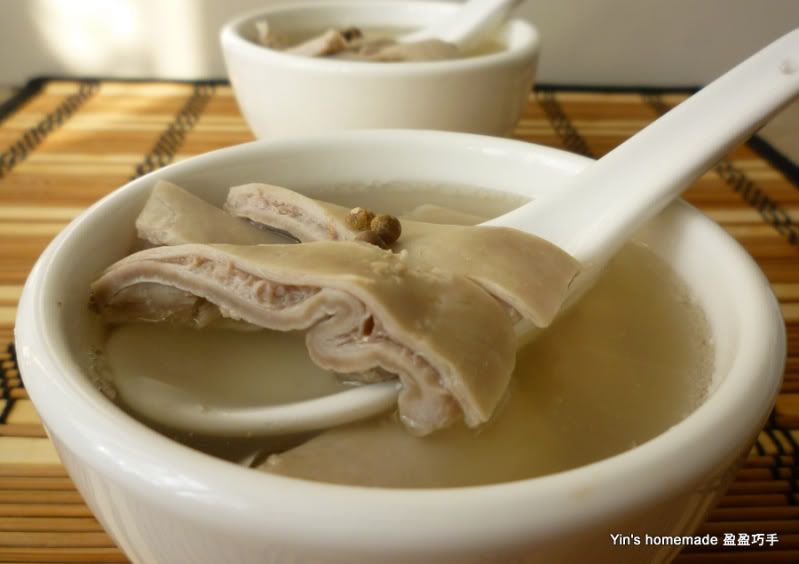
Too Thor Th'ng (Pig Maw Soup) 猪肚汤 - Featured in Group Recipes


Nyonya Cuisine – Part 4

I hope the title won't put you off straight away. I know not many people dare to consume animal offal. I shy away from most of the organ parts such as liver, intestines too. But for pig maw (pig stomach) it can be really nutritious especially for Chinese women after giving birth. During month long of confinement period, pig stomach soup a.k.a. "Too Thor Th'ng" in Hokkien is one of their main dishes to consume. As the Chinese believes eating different parts of animal will benefit the corresponding parts of our body (以形朴形). Hence, eating pig's stomach is supposed to 'replenish' the stomach of women who have just given birth. This pig maw soup is another Penang Nyonya delicacy. This soup is also one of the signature soups served during Chinese New Year.

Initially, I thought only Chinese eats pig stomach. In fact Chinese eats nearly every part of a pig! But after some Google searches, I was surprised to find out that pig maw (a.k.a. Hog maw) is also served in Western cuisine especially in Italian, Scottish and Pennsylvanian Dutch. Other than pig maw, the next most important ingredient of this soup is cracked peppercorns of white peppers; hence some call this soup peppered pig stomach soup. With the pepper in the soup it brings out the heat thus perfect to warm up your body to counter the cold weather. The Northern Hemisphere is currently in the winter months so it can be a great timing for the "Northern Hemisphereans" to try this out.


Too Thor Th'ng (Pig Maw Soup) 猪肚汤 Featured in Group Recipes 7/12/2010
 The making of the soup is easy but the preparation is a tricky one especially in the cleaning of pig maw. If you are not familiar with cleaning pig stomach, you will end up with a smelly soup. So, how to clean the stomach?

Below is my highly experienced cook- Chef Ah Lan demonstrating the correct way to wash the pig maw. I must warn you first, it may look gross to some of you. Don't watch it immediately after your meal J


Friday, December 3, 2010

Penang Loh Bak (Sausage Pork Roll) 槟城五香卤肉


Nyonya Cuisine – Part 3


Loh bak (Sausage Pork Roll) is another famous Penang Nyonya food. It is also one of the Penang well known hawker delights easily available at many Penang street stalls or night markets sold as finger food. Usually they are sold in a combo platter of loh bak which includes, prawn fritters, fried bean curd (taukua) , five spice hard boiled eggs, century eggs, and slices of cucumber.

Recalling my school days, I used to eat Loh Bak as supper after late night shopping with friends at night markets. We used to order a combo plate and sit down to share this little snack before heading home. To many Penang families, it can also be served as an entree in a multi-course meal especially during festive celebrations or sometimes even wedding dinners.

I'd been thinking of making this for quite a while now; I had even bought the bean curd sheets but just had not got the right time to make it. With Auntie Lan , our Nyonya expert around, how could we not ask her to make this Nyonya dish while she's still with us? J So, again let me feature my guest chef showing off her Nyonya cooking skills.
However, we were unable to come out with the same loh bak taste as back home. This was because I couldn't find one of the main ingredients that's called Sengkuang in Malay or "bangkuang" in Hokkien which was a kind of sweet root vegetable. When I wrote this post, I tried to Google for English name; it gave me a Spanish word Jicama and Yam bean. I was surprised to read that some refers to it as turnip. I guess for our next trial we can either use water chestnuts or opt to use turnip as replacement.

My auntie said you can also make this into vegetarian version by replacing the meat with Yam. Vegetarian Loh Bak (斋卤肉)which has another name "Huang Jiang" in Teochew is one of the many vegetarian dishes prepared by her during the 1st day of Chinese New year. This day is also regarded as vegetarian day and following the Chinese customs we are to start off with vegetarian meals.

Penang Loh Bak  槟城五香卤肉

Sunday, November 28, 2010

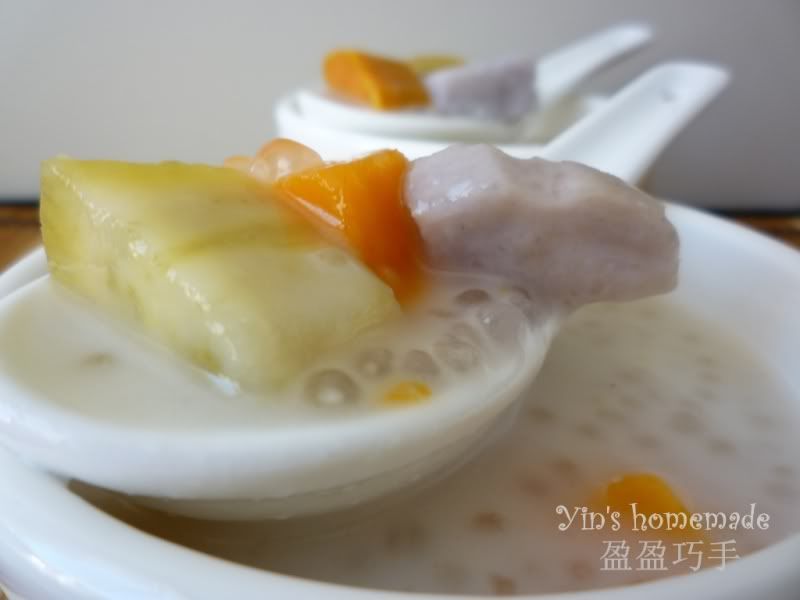
Bubur Cha Cha 摩摩喳喳 - Featured in Group Recipes


What for afternoon tea? A bowl of famous Nyonya Dessert – Bubur Cha Cha
With our master chef around, we are not only getting to eat real "home" flavoured dinner, in weekend we get to enjoy authentic Malaysian desserts and snacks. The first on the list requested by hubby was Bubur Cha Cha.

This is one of the renowned Penang Nyonya desserts. Bubur is Malay word for porridge or congee, as for Cha Cha , no one seems to know how this name originated. However, my aunt shared this with us. She said this dessert is one of the main desserts serve on 15th day and last day of Chinese New Year especially by Hokkiens. In Penang Hokkien dialects, bubur cha cha is pronounced bubur che che – and "che che" means abundance or plentiful. So, it's considered auspicious to serve bubur cha cha to family and friends on that day.

This dessert is a sweet concoction with various types of sweet potatoes (the Kiwis call it Kumara), yam or taro, sago (Tapioca peals) and coconut milk (santan). Do try to use different types of sweet potatoes, to make the dessert more colourful. For healthy version you can change the coconut milk into evaporated milk instead, however you will miss the creamy coconut flavor. This dessert can be served warm or cold.

We steamed all sweet potatoes and taro until tender then added with boiled coconut milk. This way the kumara and taro would not be too mushy. Hubby loves the taste of sago, which is chewy and stretchy in its texture, so we were asked to put more sago. One of the common cooking habits of the older generation is that they tend to cook more, so we ended up with a huge pot. Well, this seemed to be good news to my friends who stayed around my neighbourhood J

Bubur Cha Cha  摩摩喳喳 - Featured in Group Recipies 28/11/2010

No question needed to be asked on how good the dessert was, as both of my young and old food critics asked for second bowl, this showed how good the dessert was! I must say the kumara in NZ tasted much sweeter and aromatic than that in Malaysia. It also has a smoother texture.


Thursday, November 25, 2010

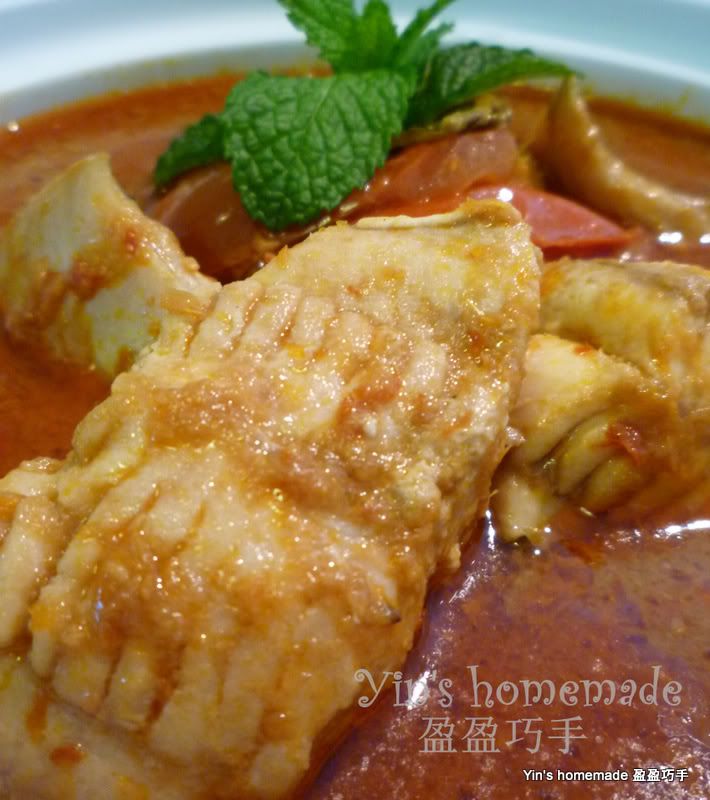
Asam Pedas Stingray 亚叁浦鱼 - Featured in Group Recipes


Nyonya Cuisine


Following my last post, the second dish served last Saturday night by our guest chef was the famous Nyonya Asam Pedas (Sour and Spicy) fish. We used Stingray (Skate Wings), which was a common fish for curry because of its not so flaky texture and the ability to withstand long simmer.  In addition, it has no tiny sharp bones which makes it very easy to eat. If you are not used to cook this fish, you can opt for pomfret or mackerel or any fish steak that does not flake easily.
That night other than the Lo Ark , this sour spicy dish was another big hit that teased our appetites to second and even third servings of rice J
Asam Pedas Stingray 亚叁浦鱼 - Featured in Group Recipes 25/11/2010

Wednesday, September 8, 2010

Assam Pedas Salmon fish head 亚叁鱼头


Assam Pedas fish head is one of my favorite curry dishes which I often eat back home. Since we moved here, I seldom get the chance to eat spicy dishes, not to mention authentic Malaysian Asam Pedas. In fact locating a nice Malaysian Restaurant is not easy too.


With so many Asian grocery shops in Auckland, getting spices like curry powder, tamarind or even belacan (shrimp paste) is not an issue at all. In fact, I can even find Malaysia's brand curry powder and my hometown Penang made belacan! So, with all these ingredients easily available no excuse for me not to cook it when I really crave for it especially during cold winter right ? :-P

Below is the recipe I used to cook my Asam Pedas using Salmon Fish head.


Assam Pedas Salmon fish head 亚叁鱼头

Ingredients:
2 salmon fish head
lady fingers(okra) /eggplants
1 tomato (cut into wedges)
2 tablespoon of fish curry powder
2 sprigs of daun kesum (Vietnamese mint/Vietnames coriander)
5 tablespoons of cooking oil
1 tablespoon of palm sugar/sugar
Salt to taste
Spice Paste:
1 clove garlic
1 stalk of lemon grass (white part only)
4 shallots
5-8 dried chillies (depends how spicy you like)
1/2 tablespoon of belacan (prawn paste)
Pound the spice paste with mortar and pestle or grind them in a food processor. Set aside.


Tamarind Juice:
1 1/4 cup of water
Tamarind pulp (size of a small ping pong ball).


Soak the tamarind pulp in warm water for 15 minutes. Squeeze the tamarind pulp constantly to extract the flavor into the water. Drain the pulp and save the tamarind juice.
Method:

  1. Heat oil and fry the spice paste for 2 minutes or until fragrant.

  2. Add the tamarind juice, fish curry powder and bring to boil.

  3. Add the tomato wedges and okras and bring to boil.

  4. Add the fish, salt, and palm sugar/sugar.

  5. Simmer on low heat for 5 minutes or until the fish is cooked.
Serve hot.


配料:

2头三文鱼头
羊角豆(秋葵,茄子
1
番茄(切成楔)
2
汤匙鱼的咖喱粉
2
片越南薄荷/香菜
5
汤匙食油
1
汤匙黄糖/ 或白糖
盐味
香料:
全部香料研磨。备用。大蒜
1
棵香茅(只要白色部分)
4
青葱
5-8
干辣椒(取决于你如何喜欢吃辣)
1 / 2
汤匙虾膏
亚叁/罗望子果汁:
1 1 / 4
杯水
亚叁/罗望子果肉(一个小乒乓球大小)
把亚叁肉在温水中浸泡15分钟,不断挤压提取亚叁水。汁待用。
 
方法

1
。热窝下油把香料爆香2分钟。
2
。添加亚叁汁,咖喱粉及煮沸。
3
。添加番茄和洋角豆并煮沸。
4
。添加鱼,盐和糖。
5
。慢火煮5分钟或直到鱼熟。
趁热食用。

LinkWithin

Related Posts with Thumbnails